

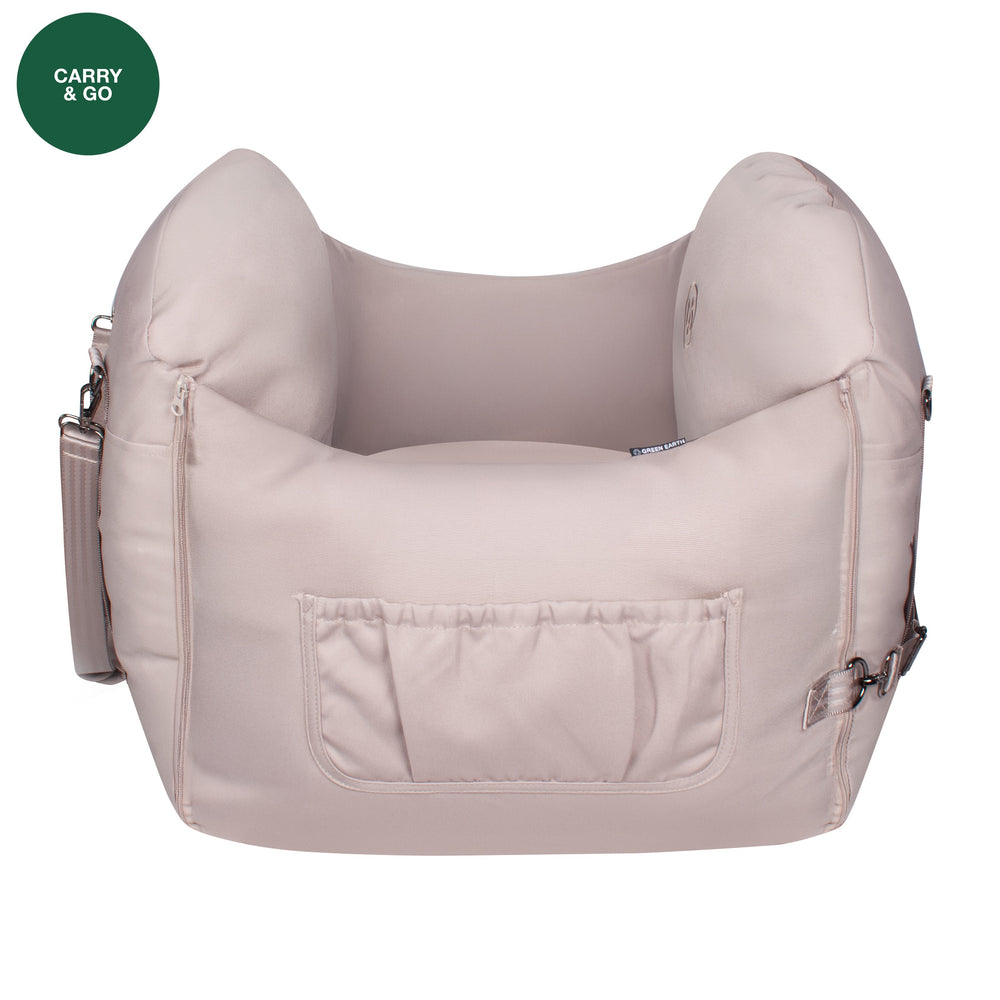
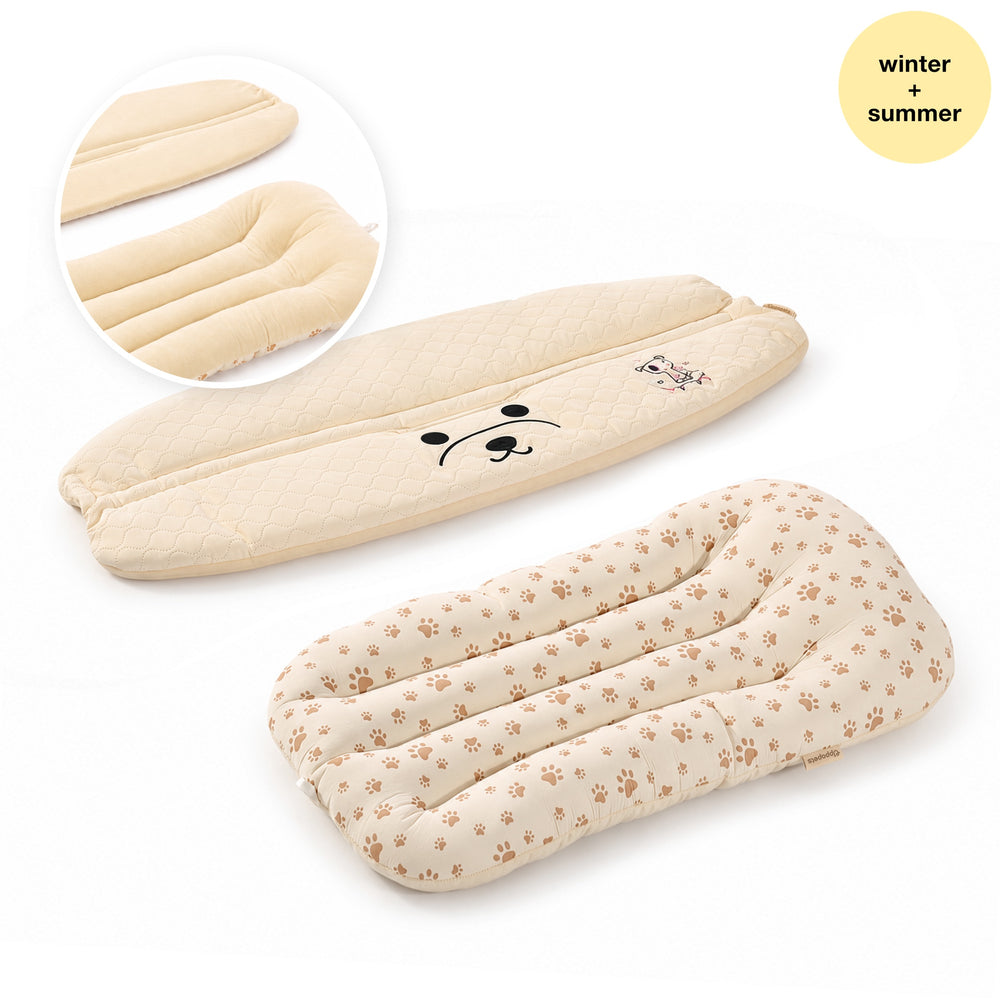

Carrying your dog for a short transfer may work perfectly well. Carrying them through a much longer outing, while also managing a lead, water and everything else you brought, is a different routine.
If you already have a clear, appropriate reason to carry your dog for part of a journey, a stroller may be worth considering. It gives you another way to organise that section of the outing. The useful comparison is the complete journey, from leaving home to putting everything away afterwards.
This guide helps you work out where wheels could make a practical difference, where a carrier may remain simpler, and which details to check before you buy.
In this guide
- Start with why you are carrying your dog
- Where a stroller could make the biggest practical difference
- Compare the whole journey, not just the footpath
- Do the doorway, stair and car-boot check
- Check the handling tasks you will still need to do
- Consider how your dog feels about each option
- When a carrier or a simpler route may remain the better choice
- Three questions that make a buying decision clearer
- An example of a useful comparison
- Questions owners often ask
Start with why you are carrying your dog
There are different reasons an owner might carry a dog. It could be an established part of a familiar trip, a transfer between locations, or an arrangement discussed with a vet. Be clear about your own reason before comparing products.
If your dog has recently started refusing to walk, seems uncomfortable or needs carrying unexpectedly, find out why. RSPCA Australia advises a vet assessment for signs such as stiffness or reluctance to walk, because a proper diagnosis matters. Read RSPCA Australia's mobility and arthritis guidance.
For an understood and appropriate carrying routine, focus on what you would like to improve. Would you like a manageable wheeled option for a level path? A place for your dog to ride during a planned section? A better way to organise repeated trips?
Treat the comparison as a practical question about your own journey. Pushing on a suitable path may organise that part of the trip differently, but it still involves handling the stroller, supervising your dog and managing transfers. Check the complete routine rather than assuming wheels will always be easier.
Where a stroller could make the biggest practical difference
A recurring journey with a suitable wheeled route
A pram is most useful when there is somewhere appropriate to push it. Think of a familiar, manageable path between home or the car and a destination you visit regularly.
The important word is “recurring”. A product that solves a weekly problem has a clearer role than one bought for an outing you may never repeat.
Write down the route and inspect the parts that could interrupt it: narrow gates, steps, difficult surfaces, steep sections and crowded entrances. If these dominate the journey, wheels may add complications instead of removing them.
Outings where carrying occupies your whole attention
When your dog is in your arms, many ordinary tasks become harder to organise. You may need to stop to retrieve water, open a gate or adjust what you are holding.
A suitable stroller changes the arrangement, but it still requires active handling and supervision. You need to steer, manage stops and remain attentive to your dog. It is not a way to leave them unattended while you shop or take a break.
Compare the two routines honestly. The benefit may be a more organised journey, rather than the ability to do several unrelated things at once.
A planned riding section during time together
Perhaps your preferred outing includes a section where you would normally carry your dog. A stroller might let you make that section part of the plan from the beginning, with appropriate walking or other activities arranged around it.
Choose the format around that specific use. A long shopping list of features is less useful than knowing how you will get your dog in, move along the route, stop and return.
If your dog does not yet know the stroller, allow for a separate introduction before relying on it. A new product cannot become a comfortable transport routine simply because an outing is booked.
Compare the whole journey, not just the footpath
| Part of the journey | Carrying or using a suitable carrier | Using a stroller |
|---|---|---|
| Getting out of the house | Consider the dog, carrier if used, doors and any other items | Consider storage, unfolding, doors and the loading arrangement |
| Covering a level route | You carry the load for the required section | You push or pull as the product is designed to be used |
| Encountering stairs | The transfer still needs to be manageable and safe | A separate plan is needed; do not assume an occupied stroller can be carried |
| Stopping at a destination | You need an appropriate supervised arrangement for the dog | You need suitable parking space and continued supervision |
| Travelling by car | Use an appropriate vehicle restraint or carrier arrangement | Confirm how both dog and stroller travel; a stroller is not automatically a car restraint |
| Arriving home | Put away any carrier and other equipment | Allow for cleaning, folding and storage |
The table is a planning comparison rather than a safety certification for any particular product. Follow the instructions for the equipment you use and resolve anything uncertain before the trip.
Do the doorway, stair and car-boot check
Three ordinary places can decide whether a stroller earns its place in your routine.
The doorway: Measure the clear opening you actually use. Include the gate or lift entrance if relevant. Consider whether you can steer through without lifting, twisting or blocking the path while managing your dog.
The stairs: Plan the transfer separately. If home access involves carrying both a folded pram and your dog, decide how that will happen before assuming a stroller reduces the work. Never lift an occupied stroller unless its manufacturer explicitly permits that exact use.
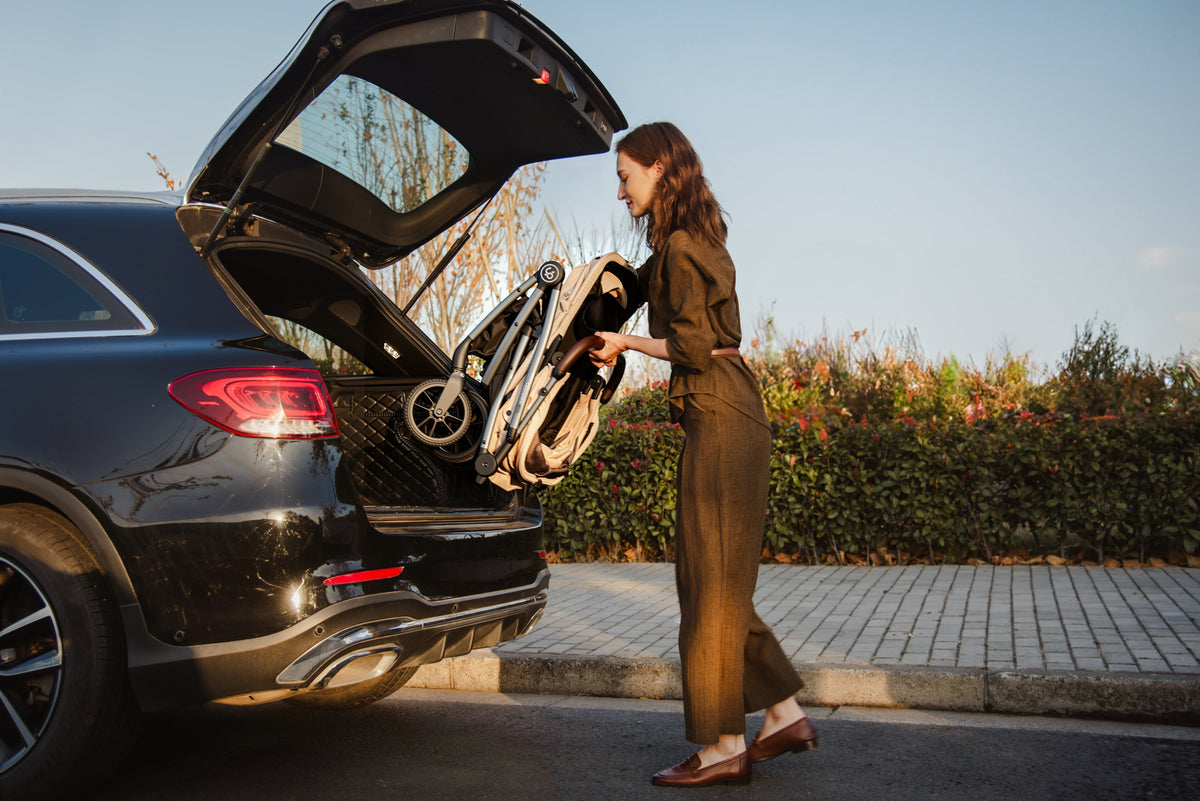
The car boot: Check the folded dimensions, opening and available space with your normal belongings present. Consider the empty stroller's weight and where its approved lifting points are. A product that fits in the boot can still be awkward to load.
Our car-boot fit guide provides a more detailed measuring process. Use it before choosing a format around how it looks when open.
Check the handling tasks you will still need to do
Pushing removes the need to carry your dog along that section, but it introduces other tasks. Can you steer and stop the selected stroller comfortably? Can you operate the brake, secure the enclosure and manage entry and exit?
Think about your usual companion too. A pram that works well for one household member may be difficult for another to lift or control. Check the routine for each person likely to use it.
If lifting or movement is a concern for you, avoid treating a stroller as a guaranteed solution to a physical problem. Assess the actual tasks and seek appropriate personal advice if needed. The goal is an arrangement you can manage, not an equipment promise about pain or injury.
Consider how your dog feels about each option
The human carrying less is only one side of the decision. Your dog needs a suitable space and a comfortable response to the new experience.
A dog accustomed to being held may find an enclosure unfamiliar. A dog who settles in a carrier may respond differently when the base moves. Make time to learn about that response before committing to a full-length outing.
Choose a cabin around usable room and posture. Include the space available with the canopy or enclosure secured as instructed. An advertised weight capacity cannot answer all those questions.
Use our measuring guide and first-ride introduction together: one checks the physical arrangement, while the other helps you introduce the experience thoughtfully.
When a carrier or a simpler route may remain the better choice
If the required transfer is short and your existing arrangement is safe and manageable, a stroller may not add much. It may also be unnecessary if moving your parking spot or choosing a closer destination solves the problem.
A route dominated by stairs or unsuitable surfaces needs particular thought. Likewise, a cramped destination may leave no appropriate space for a pram. Check access and any venue or transport rules directly; a dog being in a stroller does not automatically create permission to enter.
For a dog who remains uncomfortable riding despite a thoughtful introduction, the best improvement may be a different activity or transport arrangement. Ease for the owner and suitability for the dog need to overlap.
Three questions that make a buying decision clearer
1. What exactly would become easier?
Complete this sentence: “I currently carry my dog during ______. A stroller would help because ______.”
A specific answer lets you compare features against a task. “It would be nice to have” gives you much less guidance about the size, format or storage requirements that matter.
2. What new tasks would it add?
List folding, loading, cleaning, storing and helping the dog in and out. Include any steps at home. This is not a reason to rule out a stroller; it is how you judge the overall trade-off.
3. Would we use it often enough to value that trade-off?
Think about your real week. A recurring trip with a suitable route can justify a dedicated setup. An occasional need may call for a different answer. Only your household can decide what convenience is worth to you.
An example of a useful comparison
Consider an illustrative household that regularly drives to a quiet dog-friendly destination. Their dog already has an appropriate routine that includes being carried for a level section between the car and the destination.
The owners compare a stroller against the whole trip. They check the boot, the route, the loading process and where the pram can stand at the destination. They also introduce their dog gradually before deciding whether riding is comfortable.
If those pieces fit, the stroller has a defined job. If the boot is awkward or the destination access is unsuitable, they can choose another format or change the trip. The comparison is grounded in what they will actually do together.
Questions owners often ask
Is a dog stroller easier than carrying a dog?
It may be along a suitable route, but the whole routine matters. Include the empty stroller's weight, transfers, doors, stairs and storage in the comparison.
Does a detachable carrier solve every transfer?
No. Check the manufacturer's intended use and lifting instructions, the carrier's own weight and the combined load you would need to handle. Detachment is a feature, not proof that a loaded carrier will be manageable for you.
Can my dog stay in the stroller in the car?
Do not assume so. Follow the specific product instructions and use an appropriate vehicle restraint arrangement. A pet stroller or detachable carrier is not automatically approved or suitable for car travel in every configuration.
Where should I begin comparing options?
Start with your route and your dog's measurements, then use the Uppapets comparison page. Uppapets Australia provides local customer service if you need help clarifying product details. The best choice is the one that makes a suitable shared outing easier from beginning to end.
Find their ride