


There is a lot to discover in a puppy’s first weeks at home: the doorbell, a passing bicycle, a visitor carrying an umbrella. An introduction does not need to be a big event to count.
For outings beyond home, start with advice specific to your puppy. Their vaccination stage, health and the local environment all matter when deciding where to go and what contact to allow.
Make a plan with your vet
Ask your vet which places and experiences are appropriate now, when public walks can begin and what precautions to take in the meantime. The RSPCA’s vaccination guidance explains that the balance between disease risk and socialisation benefits depends on the individual puppy.
Keeping paws off the ground does not remove every route of infection. A stroller is not a substitute for vaccination advice or permission to visit a busy dog park. Ask about suitable puppy classes and planned visits with healthy, vaccinated dogs your vet considers appropriate.
Choose one small experience
Write down a few ordinary things you would like your puppy to feel comfortable around, then pick an easy starting point. Watching a quiet street from a suitable spot can be a better first step than moving straight into a crowd.
Keep sessions short and positive. The RSPCA’s socialisation guide recommends introducing only one or two new things at a time. Leave space to move away and finish while your puppy is still comfortable.

Practise the ride before the outing
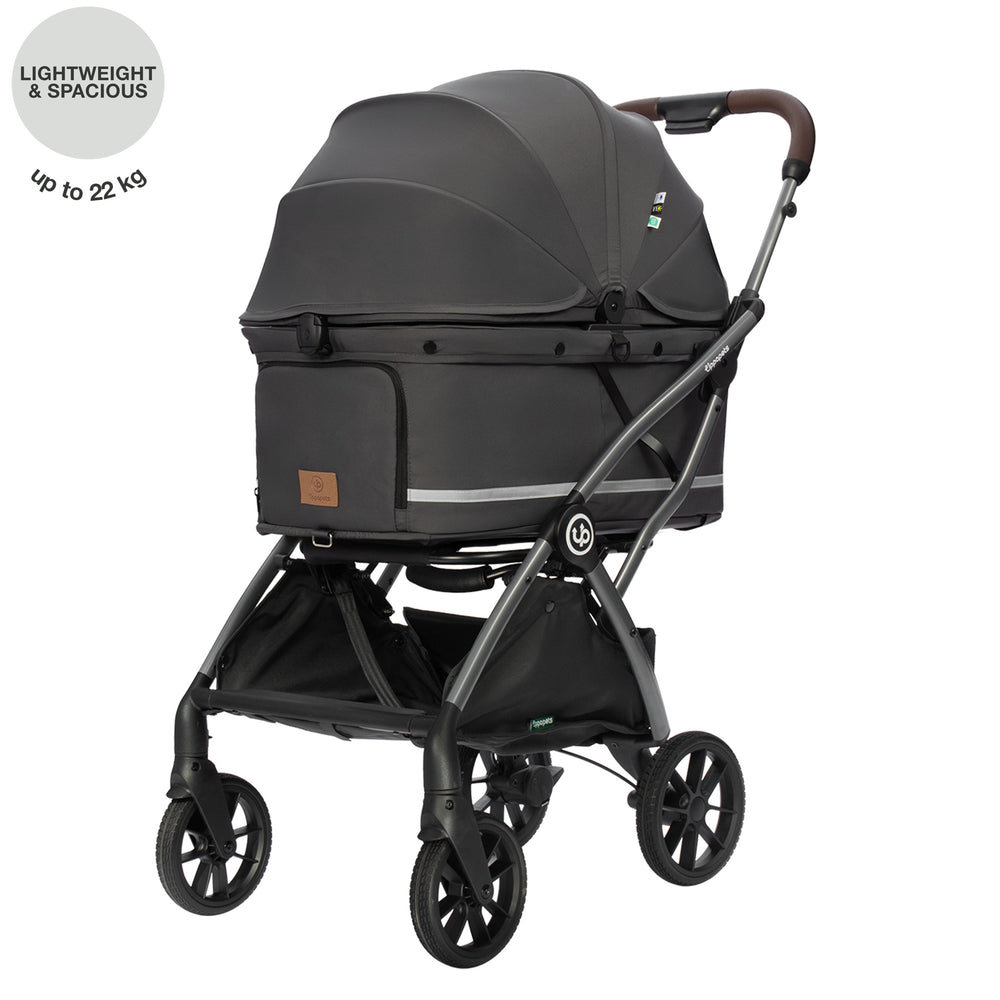
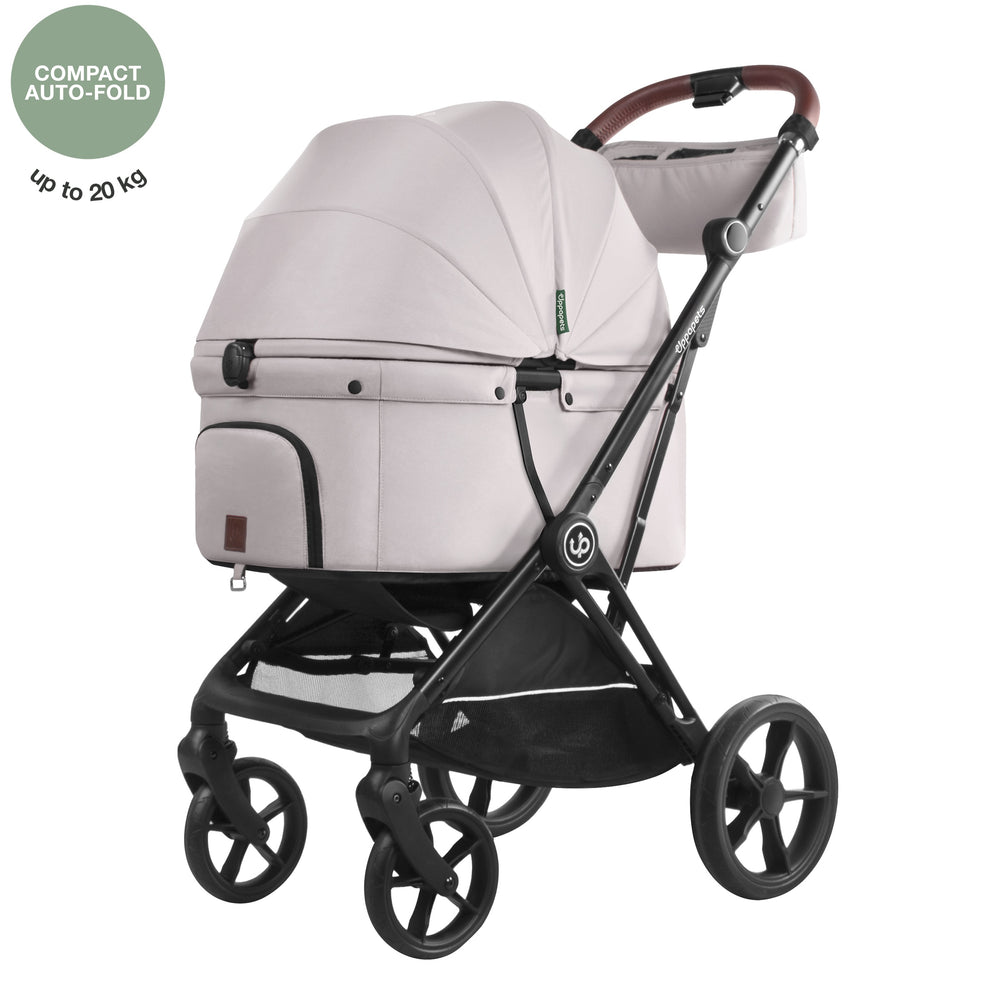
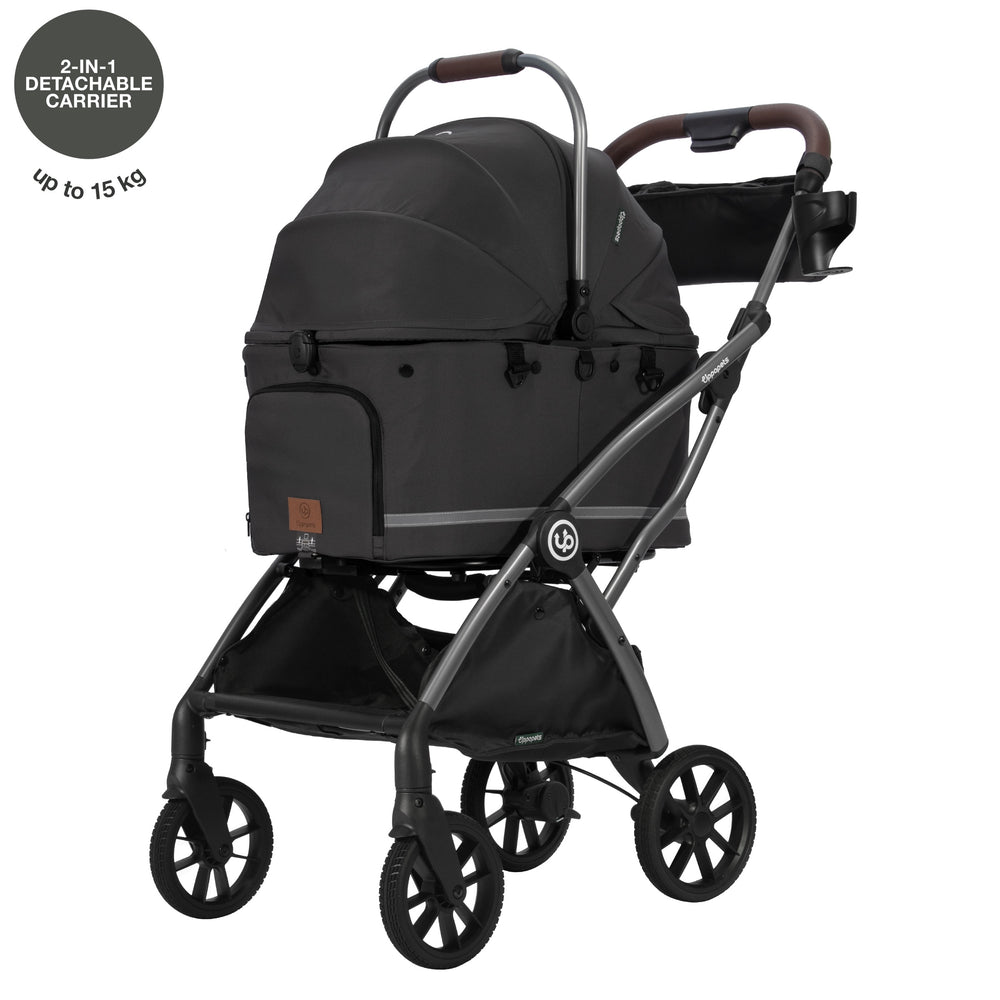
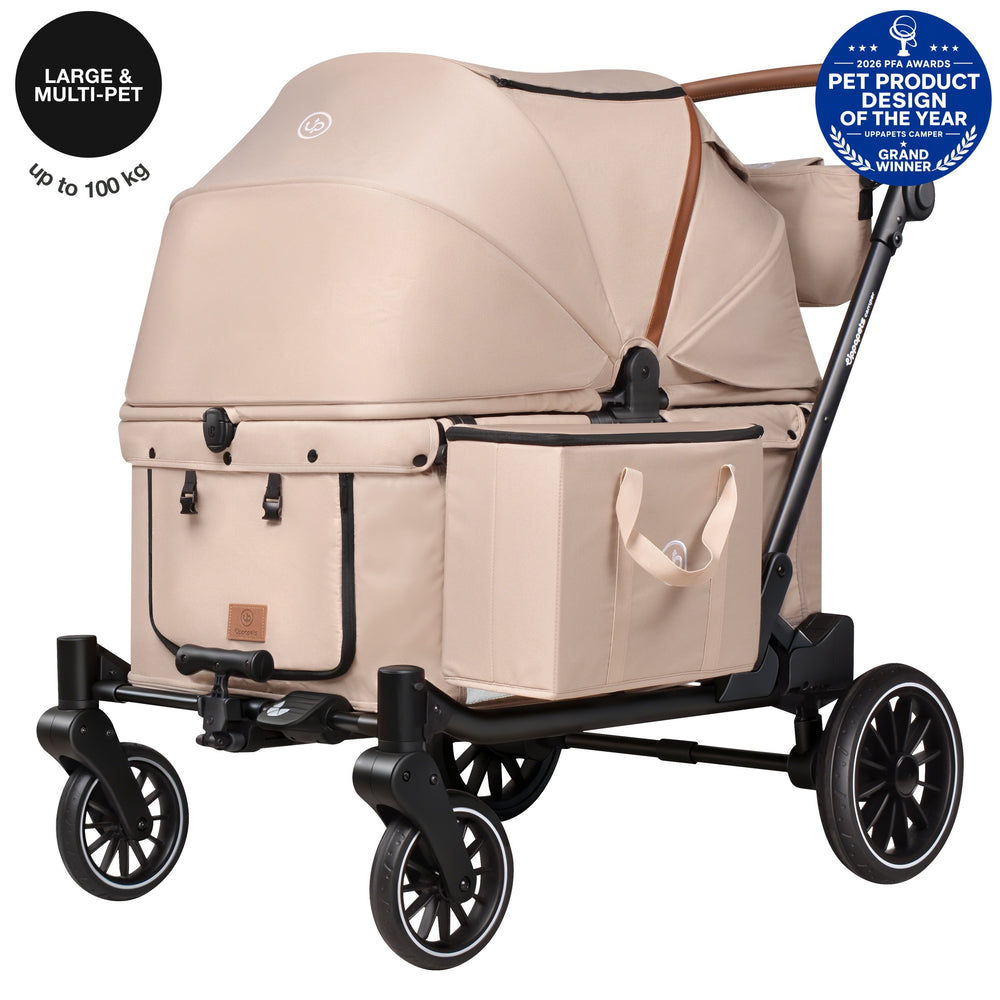
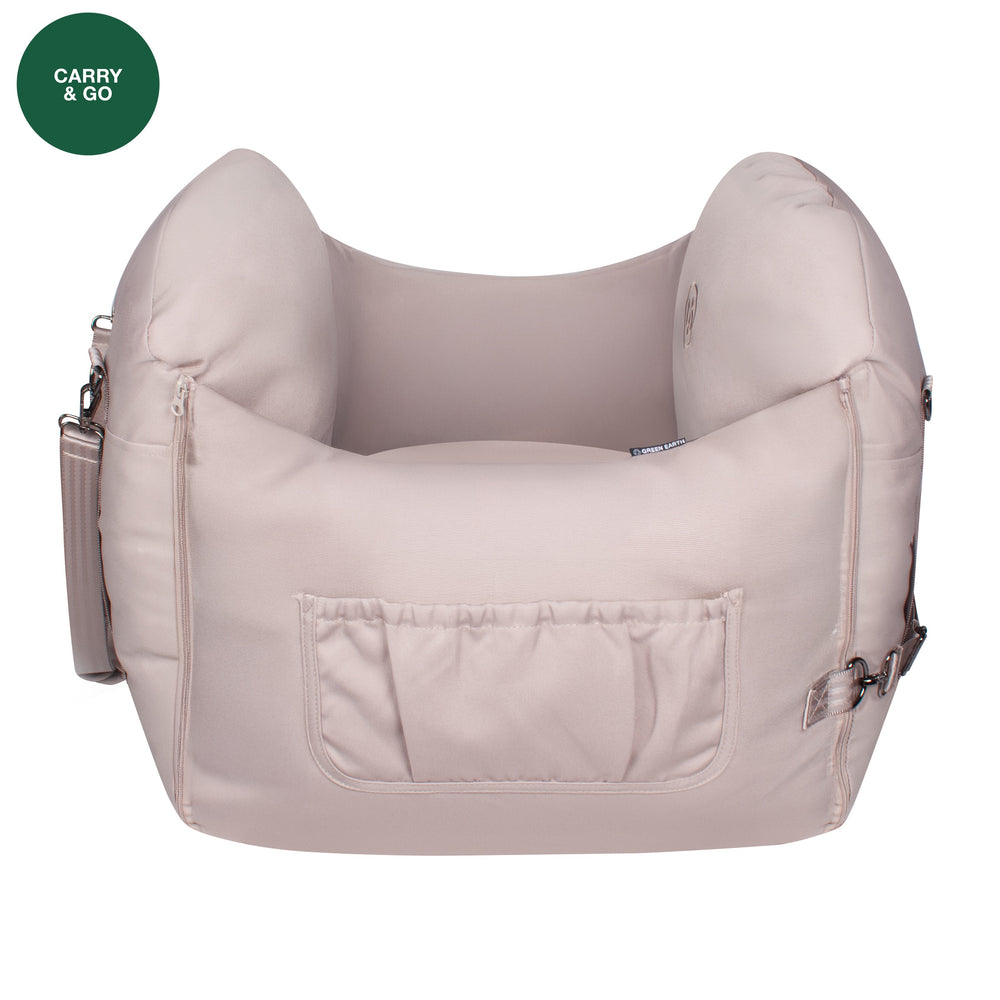
If you plan to use a stroller, let your puppy become familiar with it at home first. Start with the brake engaged and the frame stationary. Introduce the cabin, closures and gentle movement in separate, manageable steps, following the product instructions.
Check the fit of their harness and the manufacturer’s attachment system. Small puppies can grow quickly, so recheck equipment often. Choose a cabin that suits their current size and confirm how their likely adult size compares with its dimensions and weight limit.
Give them time to take it in
Watching from a comfortable distance is a valid introduction; your puppy does not need to greet every person or dog. Ask people to give them space if they seem unsure, and end the session if they are overwhelmed.
Keep a simple note of what they saw and how they responded. That makes it easier to choose the next small step instead of adding more excitement each time. The aim is a puppy who can feel at ease in everyday life, with plenty of quiet time between discoveries.
Explore Uppapets