


The right dog pram fits three things: your dog, the places you go and the person pushing it. Start with your pet’s weight and resting space, then check the route out of home, the folded size and how you will lift the empty frame. Colour can come after those decisions.
If you are comparing dog prams in Australia for the first time, this guide helps turn a long feature list into a useful shortlist. The aim is a ride that works on an ordinary Tuesday as well as a weekend away.
Start with the job you need it to do
Write down the outing you actually want to make easier. Is it a neighbourhood walk with regular rest stops, a café visit with a small dog, or a trip where a separate carrier would help? These routines ask different things of a pram.
A pet stroller can provide a place to ride during an outing, but it does not set your dog’s exercise needs. If pain, illness or reduced stamina is behind the purchase, ask your vet about suitable activity and handling before changing the routine.
Check cabin space and weight separately
The maximum pet weight is a limit, not a promise that every dog below it will fit. A long-bodied dog and a compact dog can weigh the same and need quite different cabin shapes. Your dog should have usable room to sit, turn and settle without being pressed against the closed canopy.
Measure your dog in their usual resting position and compare that footprint with the cabin dimensions. Also confirm the usable height with the canopy closed: a listed carrier-wall height may not describe all the headroom. Our pet stroller measuring guide walks through the fit check.
Match the frame to the places you go
Measure the narrowest doorway or gate on your regular route, allowing space for your hands and for turns. Check lift access, kerbs and where you can stop without blocking the footpath. A large cabin is useful only if you can comfortably get it to your destination.
Look at the wheel, suspension and brake information together. Ask about the surfaces you expect to use, rather than treating “all-terrain” as permission to go anywhere. Everyday walking, jogging and cycling are different uses; only use a stroller for activities the manufacturer specifically permits.
Try the lift and the fold on paper first
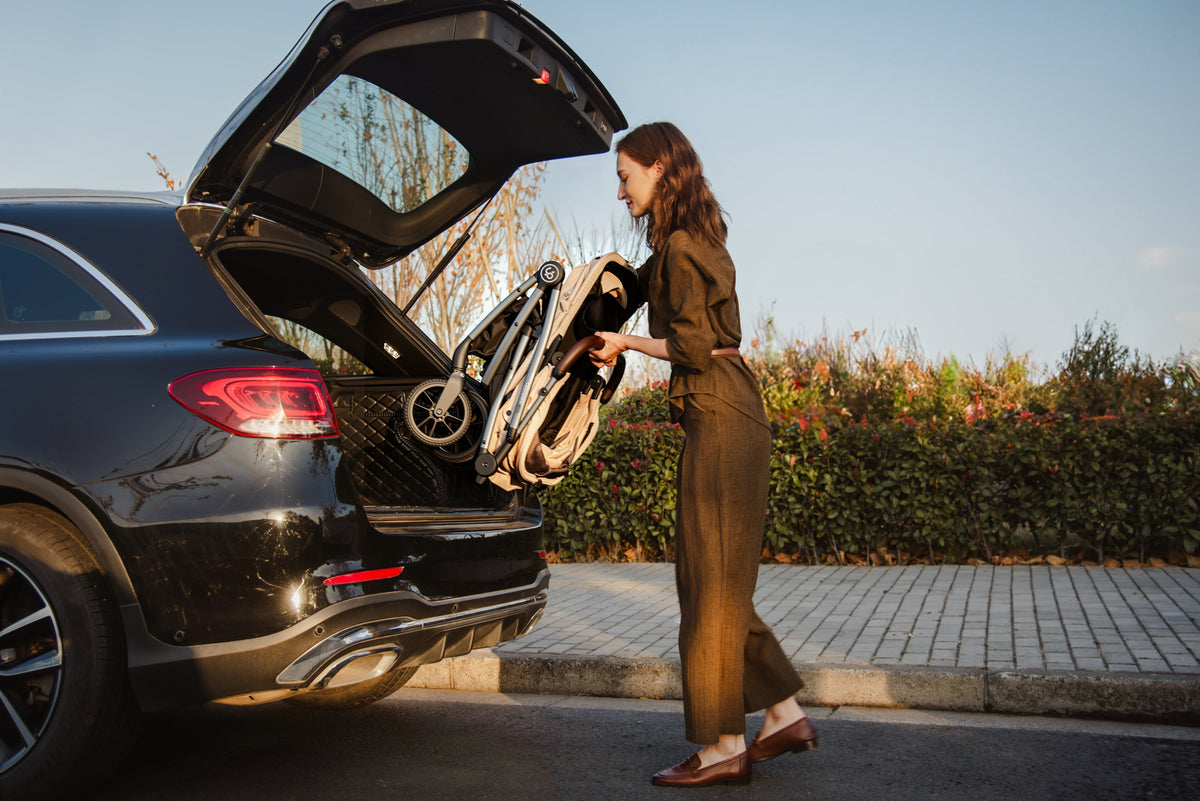
Compare the stroller’s own weight, not just its pet capacity. If you drive to most outings, you will lift the empty pram at the beginning and end of each trip. Think about boot height and whether you can manage that movement comfortably.
Folded length, width and height all matter. Mark the footprint in your boot or storage space, leaving room for the belongings you usually take. A self-standing fold may help with storage, but it still needs an appropriate, secure spot. Use the car-boot fit checklist before ordering.
Shortlist by the feature you will use most
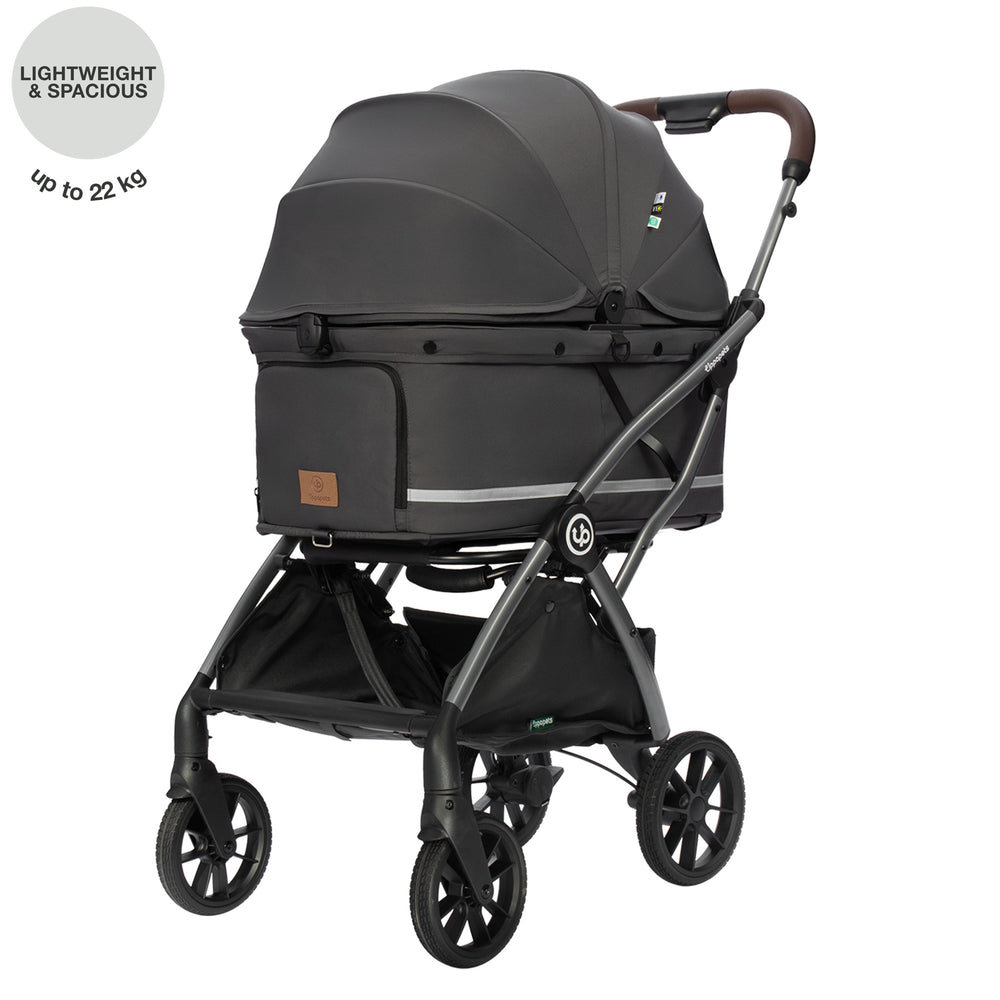
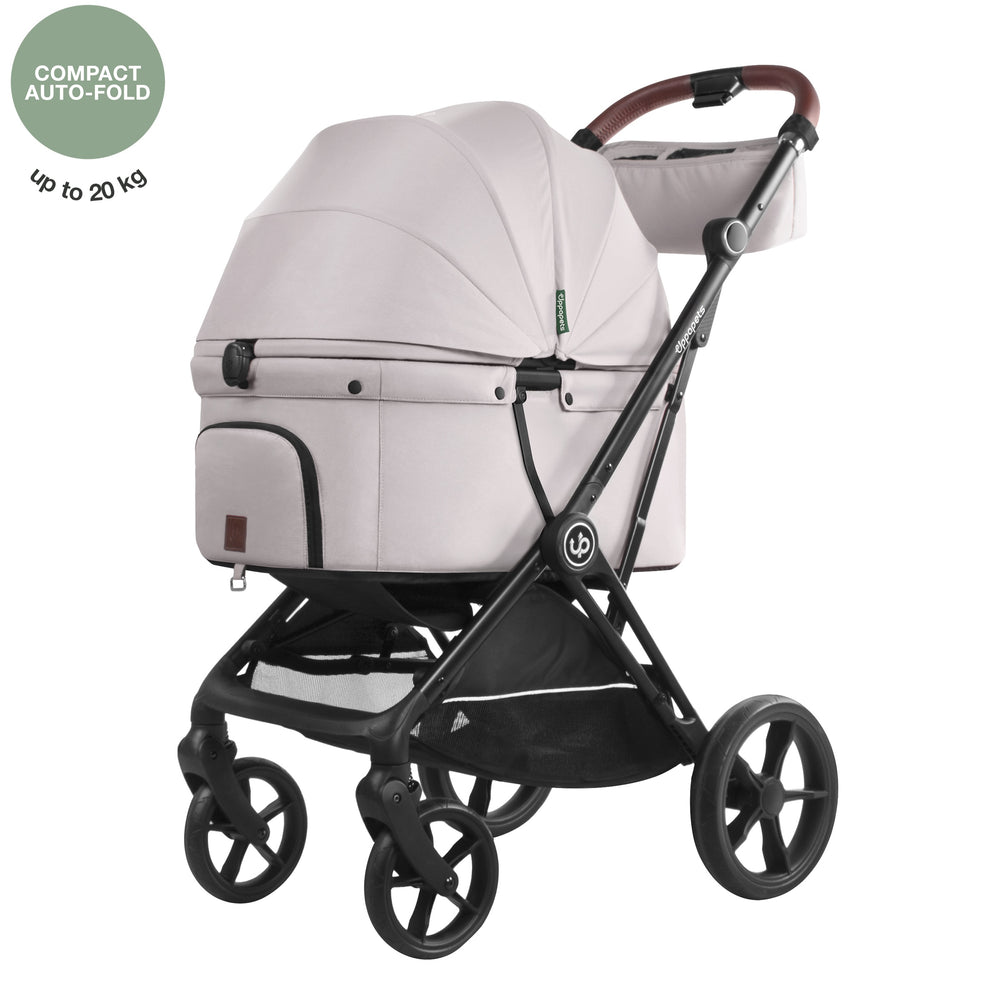
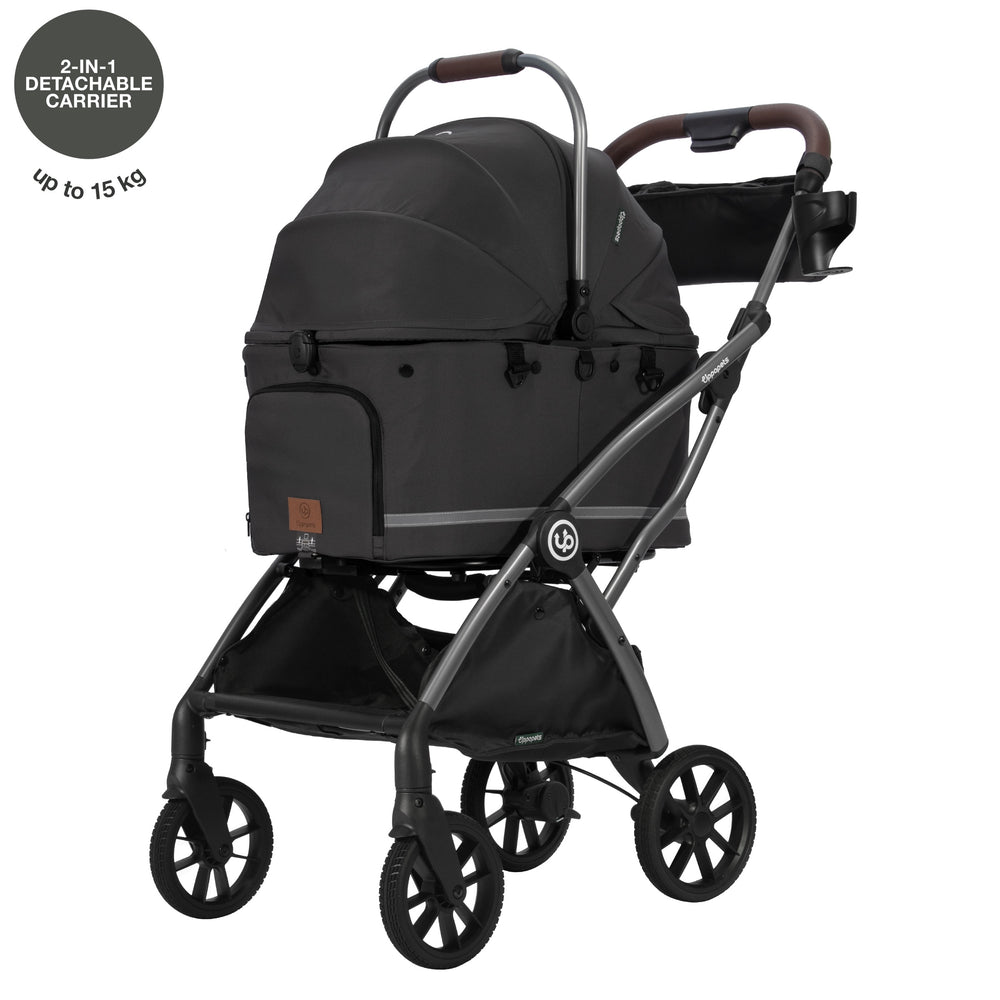
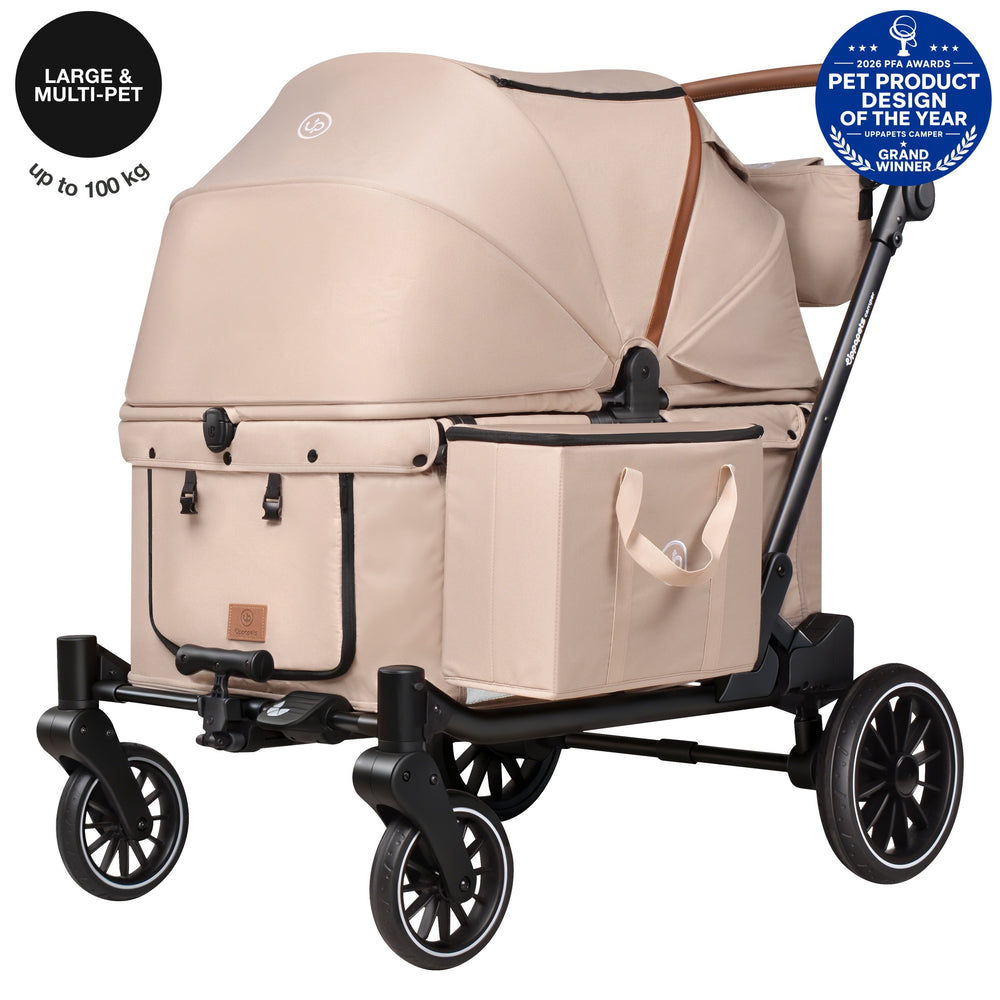
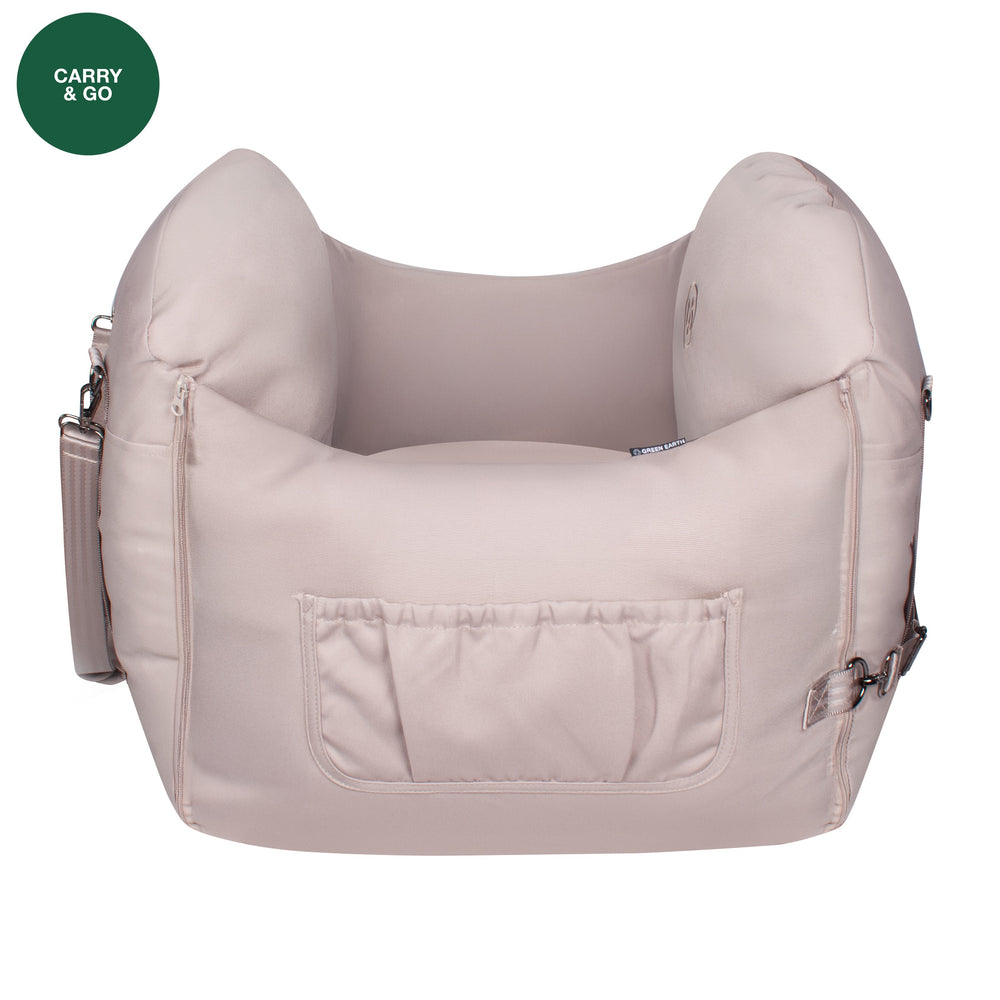
Within the Uppapets range, Hybrid is the lightest of Hybrid, Nero Plus and Flander at 8.4 kg, with a 22 kg maximum pet weight. Nero Plus has a shorter open footprint than those two models and supports up to 20 kg. Flander adds a detachable carrier and supports up to 15 kg. Camper Max is the larger option for pets needing more space.
Those are starting points, not breed recommendations. Compare the exact cabin and frame dimensions on the current specification page. Check inclusions, current availability, care instructions, warranty and return conditions before deciding; they are part of the ownership experience too.
A five-question buying checklist
- Can my dog settle comfortably within the cabin and pet-weight limit?
- Will the open frame fit the doors, paths and lifts we use?
- Can I lift and store the empty, folded pram?
- Do I need a detachable carrier, or will the cabin stay on its wheels?
- Have I checked the brakes, closures, restraint instructions and after-sales support?
Common questions before buying
Is a dog pram different from a dog stroller?
Retailers commonly use both names for a wheeled pet carrier. Compare the actual design, dimensions and permitted use rather than relying on the name.
Does a bigger weight rating mean a better pram?
It means a higher stated limit, not necessarily a better fit for your home or dog. A larger model can add weight and take more storage space. Choose the smallest practical footprint that still meets your pet’s space and capacity needs.
Once your shortlist is down to two, compare the daily routine side by side. The most useful extra is the one that solves a problem you will encounter often.
Find their next ride