

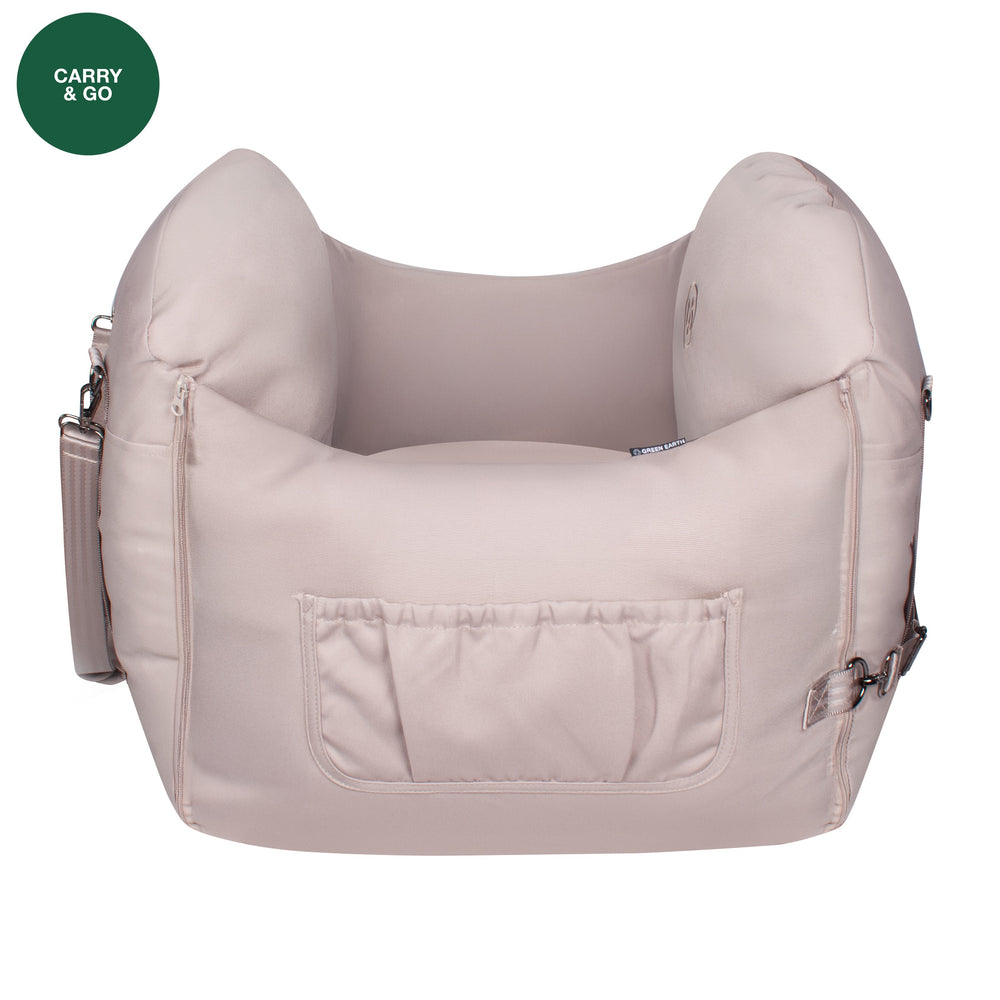


When choosing a cat stroller, start with containment, usable space and your cat’s comfort with the experience. A generous weight limit or a wide viewing window cannot tell you whether a particular cat will settle inside.
A cat pram may be useful for a suitable cat and a carefully planned journey. It is not something every cat needs. If your cat finds leaving home distressing, a quieter routine and advice from your vet may be more useful than a new piece of equipment.
Look at the whole enclosure
Inspect how the canopy closes, where mesh panels meet the fabric and whether there are gaps around access points. Ask the seller to explain the complete containment setup for cats, including any internal attachment and the correct way to use it.
Do not treat a canopy fastener or a product photo as evidence that a stroller is escape-proof. Follow the model’s instructions, check closures before each trip and inspect fabric and mesh for damage. If an internal attachment is required, confirm its compatibility with your cat’s correctly fitted harness; do not improvise a collar attachment.
Measure beyond your cat’s weight
Your cat needs room to sit, turn and rest with the canopy closed. A large, long-bodied cat may need more usable space than a smaller cat of similar weight. Include the thickness of the supplied cushion or permitted bedding when thinking about headroom.
Ask what the stated cabin height measures. On some product listings, carrier-wall dimensions and the full enclosed height are different measurements. Confirm the usable closed-canopy space rather than guessing from a side-on photograph.
Choose between an integrated cabin and a detachable carrier
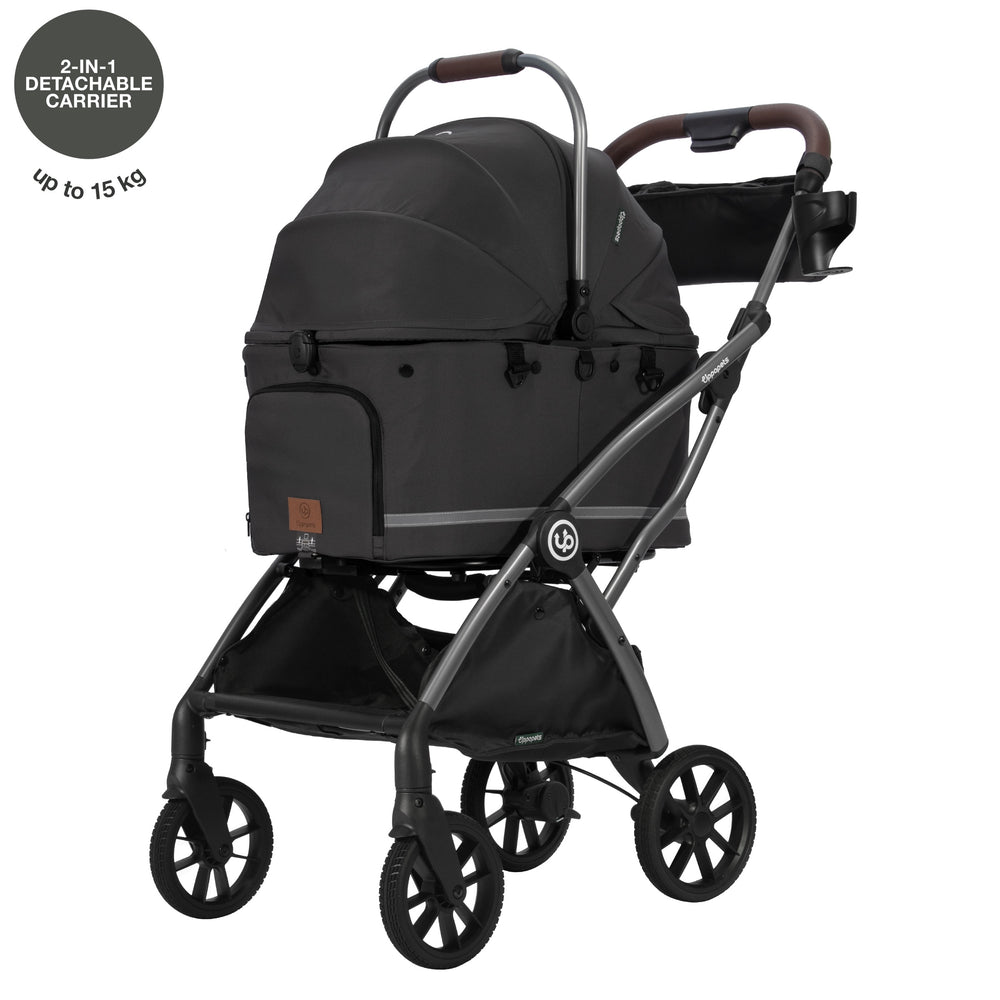
An integrated cabin stays with the stroller frame. A detachable carrier can come off the wheels for the parts of a journey where carrying is permitted and practical. Map out your actual trip: front door, car, parking area, destination and return.
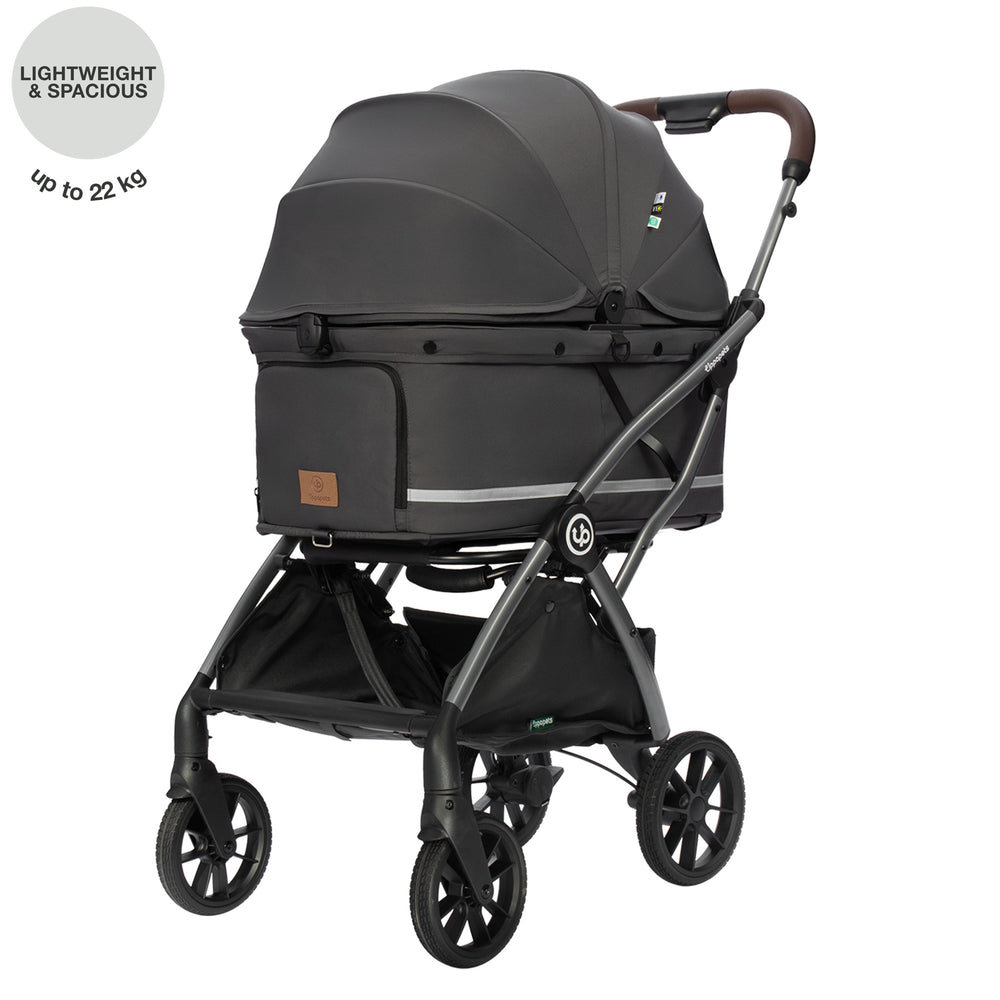
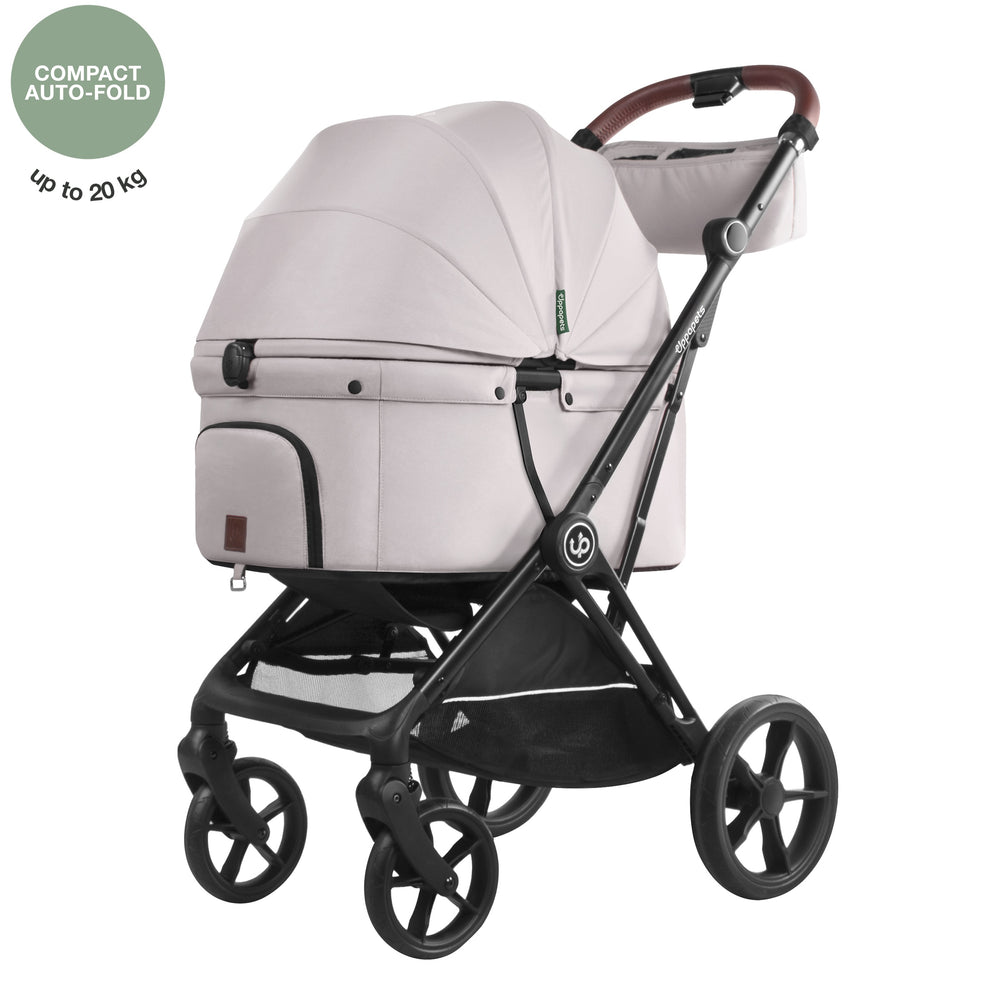
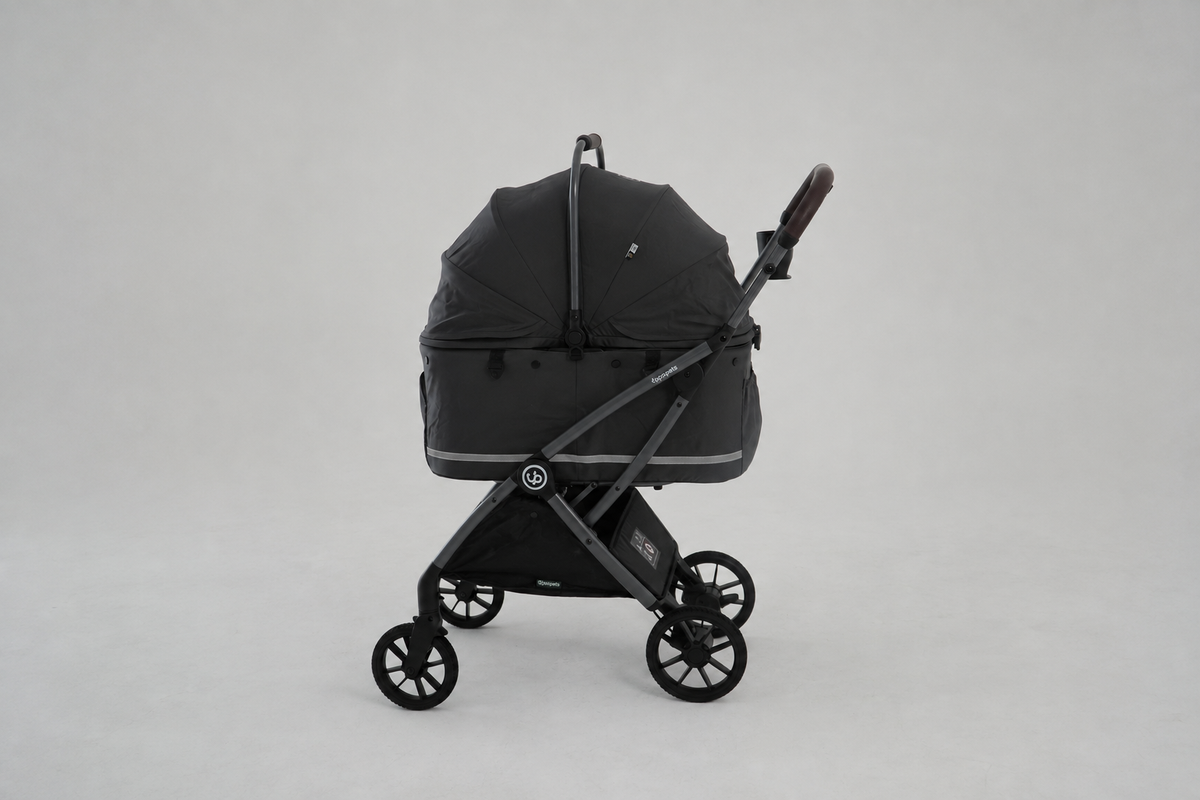
Within the Uppapets range, Flander has a detachable 2-in-1 carrier and a maximum pet weight of 15 kg. Hybrid and Nero Plus use fixed or integrated cabins. Flander’s listed carrier dimensions are 52 × 34 × 24 cm; confirm usable enclosed headroom and your cat’s resting space before deciding.
Check the route from your cat’s point of view
A busy street brings dogs, unfamiliar voices and movement close to the cabin. Choose an initial setting you can leave easily, rather than making a crowded event the first test. Plan a secure place to open the carrier if you need to, away from open doors and traffic.
Look for ventilation that remains unobstructed in normal use. Do not drape fabric over openings to make the cabin feel private. A canopy is not cooling equipment, and mesh does not make hot conditions safe. Keep outings appropriate to the weather and your individual cat.
Let familiarity come before movement
The RSPCA’s carrier-training guidance recommends gradual, reward-based familiarisation without forcing a pet inside. Begin in a quiet, familiar room and progress at your cat’s pace.
Use the stationary cabin as the first introduction, following its instructions. Add brief closure and movement only once your cat is comfortable with the earlier stage. A short calm session gives you more useful information than completing a planned distance. End the session if your cat is distressed; ask your vet for help if difficulties persist.
A cat-pram shortlist checklist
- Can the seller explain the full containment and harness-attachment setup?
- Is there enough usable space with the canopy closed?
- Can you inspect and maintain the mesh, fabric and closures?
- Will the frame fit your doorways, storage spot and car?
- Do you need to detach the carrier, and can you safely handle its occupied weight?
- Can the trip stay short, calm and easy to end?
Common cat-stroller questions
Can I use a dog stroller for my cat?
Only if the manufacturer permits cat use and the containment, attachment system and dimensions suit your cat. A model marketed for dogs and cats still needs an individual fit and setup check.
Does a stroller replace a car carrier?
No automatic equivalence should be assumed. Check the intended vehicle use and fitting instructions separately. Detaching a cabin does not by itself make it a crash-tested restraint or an airline-approved carrier.
Can two cats share?
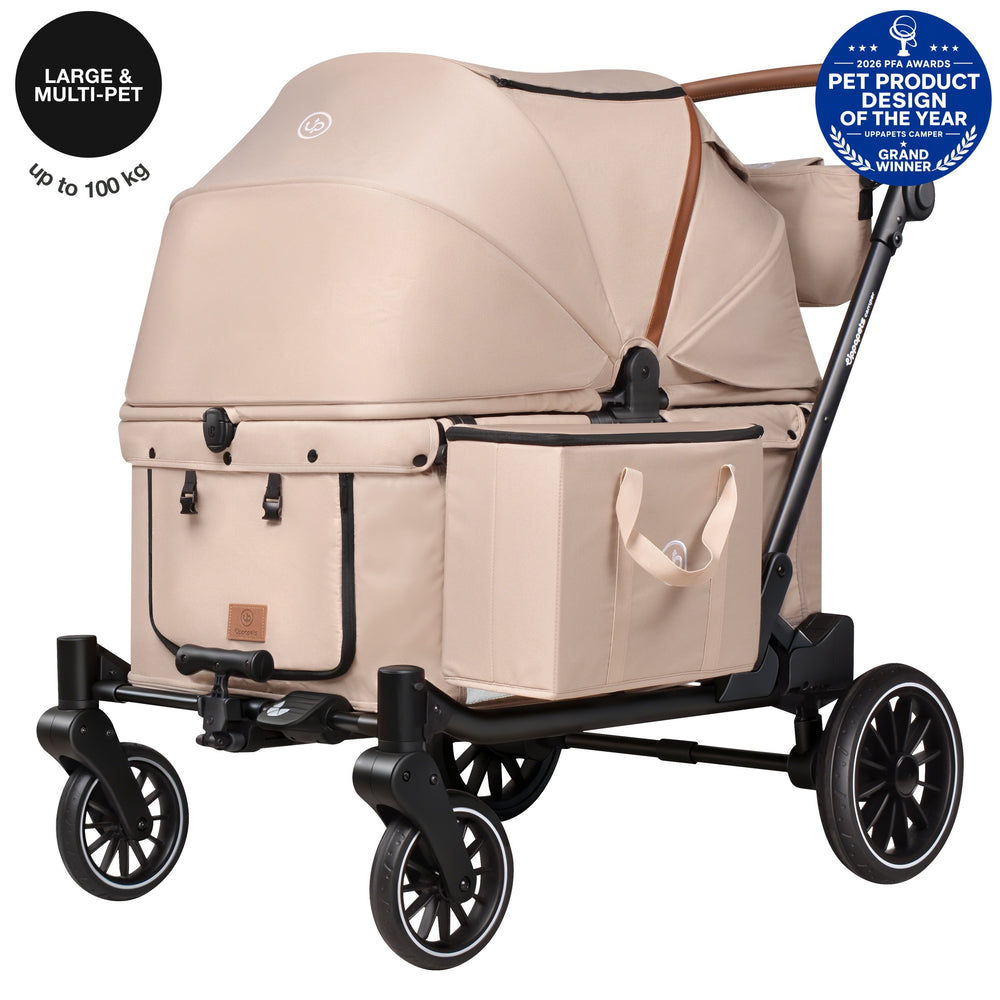
That depends on the model, available space and the cats’ relationship. Being within the combined weight limit is not enough. Each cat needs an appropriate setup and comfortable space; separate carriers may be a better arrangement.
For help choosing, share your cat’s weight, resting measurements and the journey you have in mind. Those details are more useful than choosing by appearance alone.
Find their next ride