



Two small dogs can share a pet stroller when the model is suitable for multiple pets, their combined weight is within its limit, and both dogs have enough room to sit, turn and settle comfortably. They also need to feel relaxed together in the cabin and have a restraint arrangement that follows the manufacturer's instructions.
The word “small” is not enough to establish a fit. Two dogs can be comfortably below a stroller's weight limit and still run out of usable space. Equally, dogs that happily share a sofa may prefer separate space in a moving cabin with different sounds and a more restricted exit.
Work through weight, space, compatibility and handling in that order. It is a more useful process than choosing a stroller by a photograph of two pets or dividing its weight limit in half.
In this guide
- First, check whether the model is intended for shared rides
- Add the weights, then check what the limit covers
- Measure two resting spaces, not just two body lengths
- Make a floor outline before making a purchase
- How the two Uppapets options compare
- Sharing comfortably matters as much as fitting physically
- Introduce the cabin to each dog first
- Plan the restraint arrangement and the exit
- When taking turns or using separate strollers makes more sense
- Questions about two-dog strollers
First, check whether the model is intended for shared rides
Look for explicit guidance about multiple pets on the product page or in the instructions. Do not infer approval from a large weight rating, a wide-looking cabin or the number of clips visible in an image.
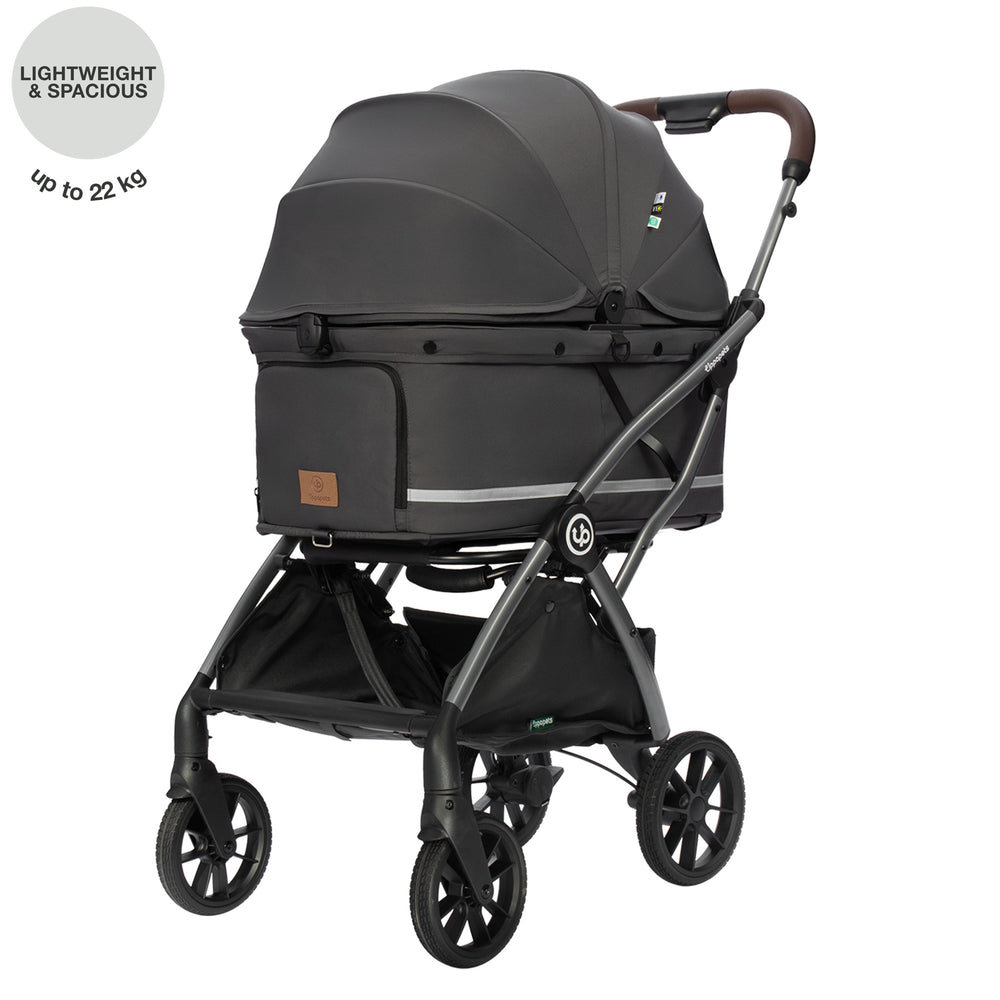
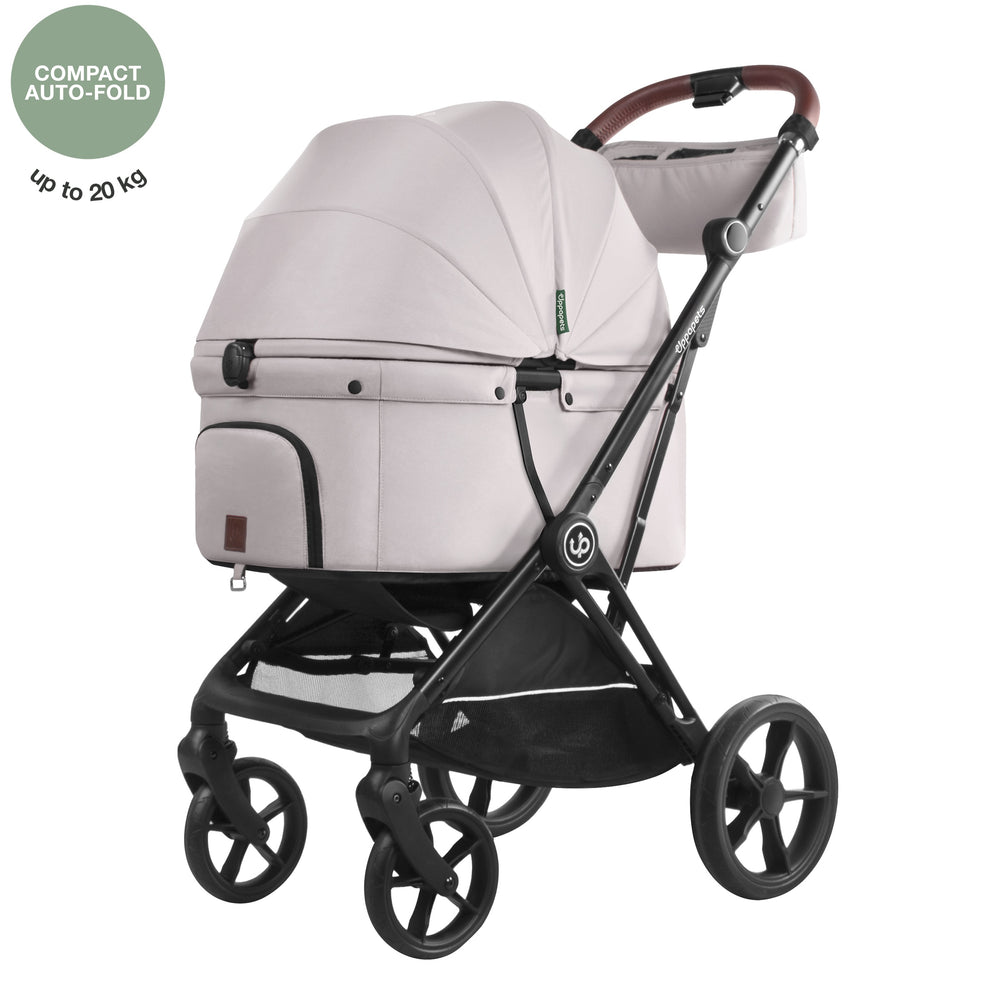
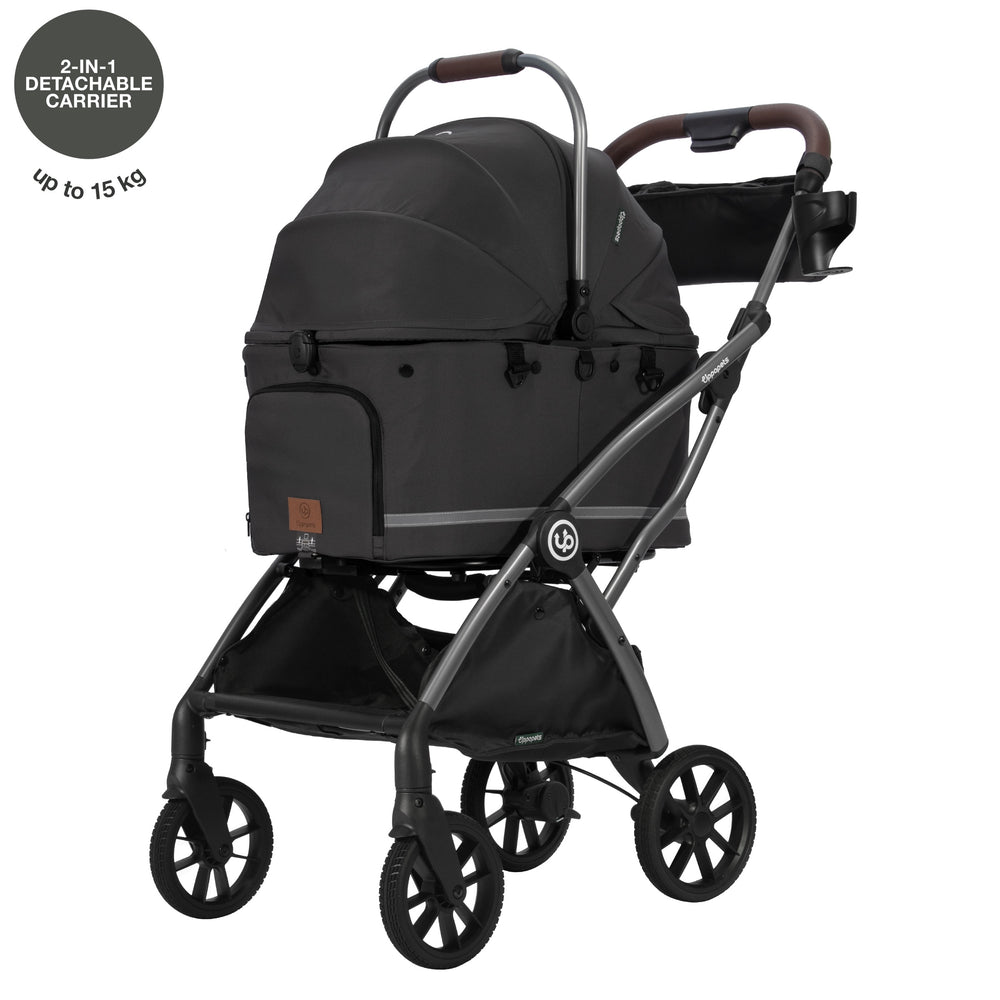
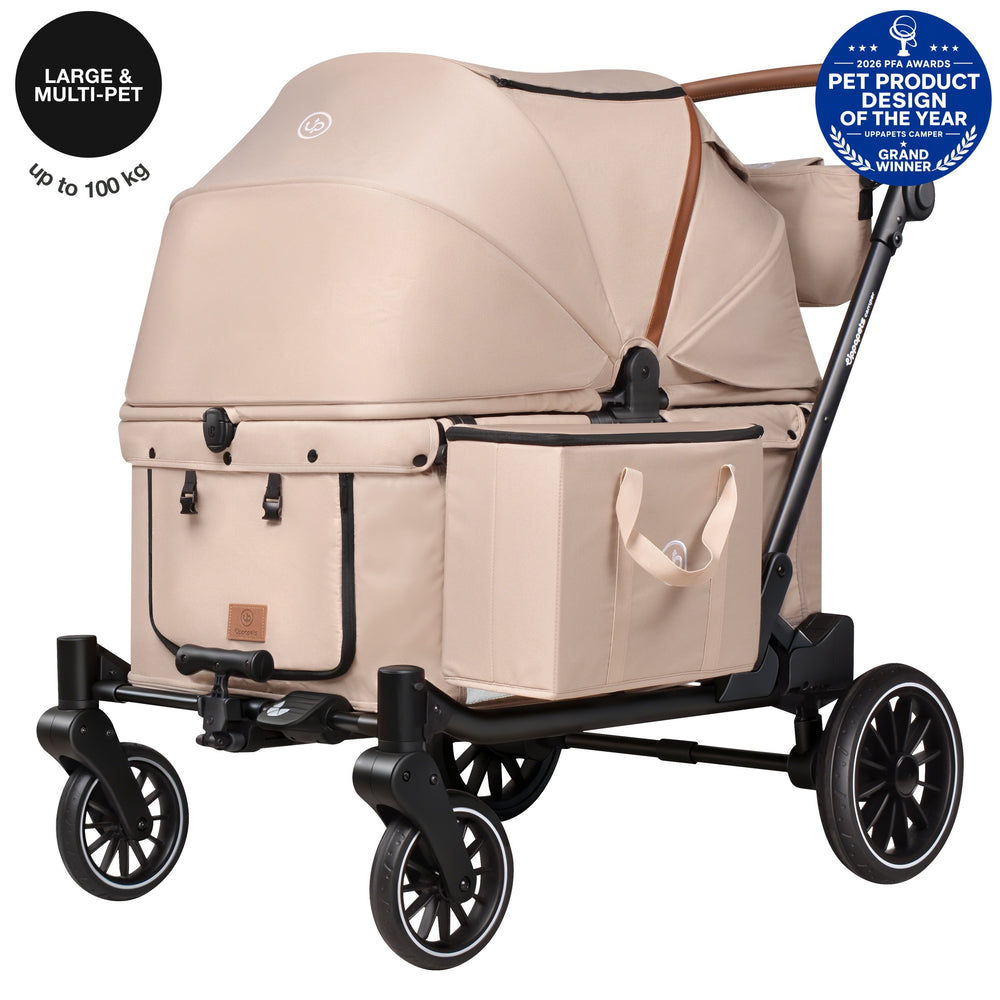
The Uppapets comparison page identifies Hybrid and Camper Max as options to explore for multi-pet households, depending on the pets' size. It also states that the weight limit applies to the combined weight of all pets riding together and that each needs room to settle comfortably.
That makes them sensible starting points within the range, rather than automatic recommendations for every pair. This guide uses published specifications checked on 20 September 2026. It does not claim that particular dogs have been fitted or tested in these models.
Add the weights, then check what the limit covers
Weigh both dogs rather than using an old estimate. Add their weights together and compare that total with the model's stated pet-weight limit. If a puppy is still growing, the current number does not establish that the same arrangement will suit them later.
For example, a 9 kg dog and a 7 kg dog have a combined weight of 16 kg. That is below Hybrid's listed 22 kg maximum pet weight. It passes the initial weight comparison only; it says nothing about whether those two particular dogs fit comfortably in its cabin.
Keep pet limits and accessory limits separate. A specification labelled “maximum pet weight” should not be assumed to describe every permitted load on the stroller, and an under-seat basket does not have unlimited capacity. Follow the model's instructions for bedding, luggage and storage. Do not add extra loads simply because the pets weigh less than the headline figure.
Measure two resting spaces, not just two body lengths
Each dog needs a usable space when the other dog is also inside. Begin by observing how they normally settle: curled up, lying lengthways or stretched onto one side. Measure a comfortable position rather than arranging them into the smallest possible shape.
Record these details for each dog:
| Measurement or observation | Dog one | Dog two |
|---|---|---|
| Current weight | _____ kg | _____ kg |
| Comfortable lying length | _____ cm | _____ cm |
| Width used while resting | _____ cm | _____ cm |
| Sitting height, including ears where relevant | _____ cm | _____ cm |
| Usual resting position | _____ | _____ |
| Comfortable sharing a small space? | _____ | _____ |
Our individual measuring guide is useful for collecting these numbers. The extra step for two dogs is to consider their positions together.
Imagine an illustrative pair that each uses 22 cm of width while resting side by side. Together, that arrangement uses 44 cm before allowing any practical clearance. A cabin listed at 34 cm wide cannot provide two separate 22 cm-wide spaces side by side, even if their combined weight is comfortably within the limit.
This does not create a universal formula for fitting two dogs. Dogs vary in posture and body shape, and a cabin is not necessarily a perfect rectangle at every height. It demonstrates why adding kilograms alone misses an important part of the decision.
Make a floor outline before making a purchase
Mark the listed cabin length and width on the floor with removable tape, away from stairs or other hazards. Use it as a visual comparison while the dogs are relaxed nearby. There is no need to force them into position or insist that they stay inside the outline.
The outline helps you see whether the proposed footprint is obviously too small. It cannot confirm the complete fit because it does not reproduce padding, tapered walls, canopy clearance or the actual usable interior. Treat it as a screening tool, then check the model's interior details.
Consider more than a still moment. Could either dog change position without climbing over the other? Could both lie down at the same time? Would one dog's preferred spot block the other's access or press them against the mesh?
Avoid choosing a cabin that works only if one dog remains perfectly curled up throughout the outing. A shared ride should provide room for ordinary movement, not require a carefully arranged photograph.
How the two Uppapets options compare
| Published detail | Hybrid | Camper Max |
|---|---|---|
| Maximum combined pet weight | 22 kg | 100 kg |
| Listed carrier or cabin dimensions | 61 × 34 × 24 cm | 82 × 46 × 70 cm |
| Empty stroller weight | 8.4 kg | 21.3 kg |
| Overall width | 49 cm | 75 cm |
| Folded dimensions | 30 × 49 × 74 cm | 110 × 75 × 49 cm |
Dimensions are length × width × height. For Hybrid, do not treat the listed 24 cm carrier height as confirmed headroom under the closed canopy. Confirm usable enclosed clearance where that affects the fit. The listed dimensions are a starting point, not a guarantee of space for any particular pair.
Hybrid may be the first option to investigate for a small pair when its cabin works for both. Camper Max offers larger listed cabin dimensions, with a larger and heavier frame to manage. Its capacity is not a reason to put more pets into the cabin than can comfortably and appropriately share it.
Camper Max's product page lists a cushion and four leashes, plus two additional small-dog and cat leash attachments. The number of supplied attachments is not a passenger-capacity promise. Use the model's instructions to establish the correct arrangement for your pets.
Sharing comfortably matters as much as fitting physically
A stroller brings dogs into close quarters with fewer ways to move away from each other. Watch how they respond to that arrangement without assuming that living in the same household makes it suitable.
Relaxed behaviour in a stationary cabin is a useful starting point. If one dog repeatedly climbs over the other, blocks their movement, guards the space, tries to leave or cannot settle, stop the shared trial. More encouragement or a longer outing is not a substitute for sufficient space and comfortable behaviour.
Avoid using food between the dogs if either guards food or becomes tense around treats. A calm individual introduction is a better starting point than asking two dogs to learn a new cabin and a new sharing arrangement at once.
If you are unsure about their behaviour together, seek advice from a qualified reward-based behaviour professional. A stroller should not be used to make dogs tolerate close contact they find difficult.
Introduce the cabin to each dog first
Begin in a familiar, quiet place with the stroller stationary and the brake applied, following its instructions. Let each dog become comfortable with the cabin individually before considering a shared ride.
The RSPCA's carrier-familiarisation guidance recommends gradual, positive introductions. Apply that principle at the dogs' pace: a calm moment in a stationary cabin is progress, and movement can come later.
Once each dog is comfortable independently, consider a brief supervised shared introduction if the space and restraint checks have passed. Keep the first moving outing short, close to home and easy to stop. Return to individual rides if either dog is uncomfortable.
The aim is a relaxed routine. There is no deadline by which both dogs have to accept sharing, and separate arrangements remain a valid outcome.
Plan the restraint arrangement and the exit
Follow the manufacturer's instructions for each dog's harness and the stroller's attachment points. Do not improvise by joining both dogs to a single short lead or by attaching a second restraint to an unapproved part of the frame.
Check that the arrangement allows the intended sitting and lying positions without crossing tightly around the other dog. A tether should not leave a dog able to jump out and become suspended. Use the enclosure as instructed and continue supervising both pets; neither mesh nor a tether makes a stroller escape-proof.
Think through unloading before leaving home. Stop somewhere level and quiet, apply the brake and manage one dog at a time while keeping the other appropriately secured. Both dogs should have a controlled transition onto their usual walking leads.
If you cannot confidently manage that process alone, arrange a second adult or choose a simpler outing. The right equipment still needs a workable human routine.
When taking turns or using separate strollers makes more sense
Sharing is not the only way to enjoy the same outing. One dog may prefer walking while the other rides, provided the person handling them can safely manage both tasks. Plan the route around both dogs' needs and avoid attaching a walking dog to the stroller in a way the manufacturer has not approved.
Separate strollers can be useful when the dogs prefer their own space, need different cabin arrangements or cannot comfortably settle together. They also require enough people and storage space to manage them.
For a dog with an injury or health-related handling needs, ask your vet whether a shared cabin is suitable. Another dog's movement can matter even when the total weight and floor area look acceptable. The two-dog outing guide covers planning a day around different walking preferences.
Questions about two-dog strollers
Can I divide the weight limit by two to choose the dogs?
No. The combined weight is only one check. Each dog's body shape, resting space, enclosed headroom, compatibility and restraint arrangement also matter.
Is one large cabin better than two separate compartments?
Neither arrangement is universally better. A shared cabin suits pets that are comfortable together and have enough space. Separate compartments can provide separation, but each compartment still needs an appropriate size and limit. Assess the actual design.
Can a dog and a cat share instead?
Do not assume the same household relationship makes an enclosed shared ride suitable. Each animal needs appropriate containment, space and a comfortable response to the other. Separate carriers may be the more manageable choice.
What should decide the purchase?
Choose a shared stroller only when the model guidance, combined weight, usable space, behaviour and handling arrangement all work. A good shared ride gives both dogs a comfortable place in the outing, without asking either to squeeze into the other's space.
Find their ride