

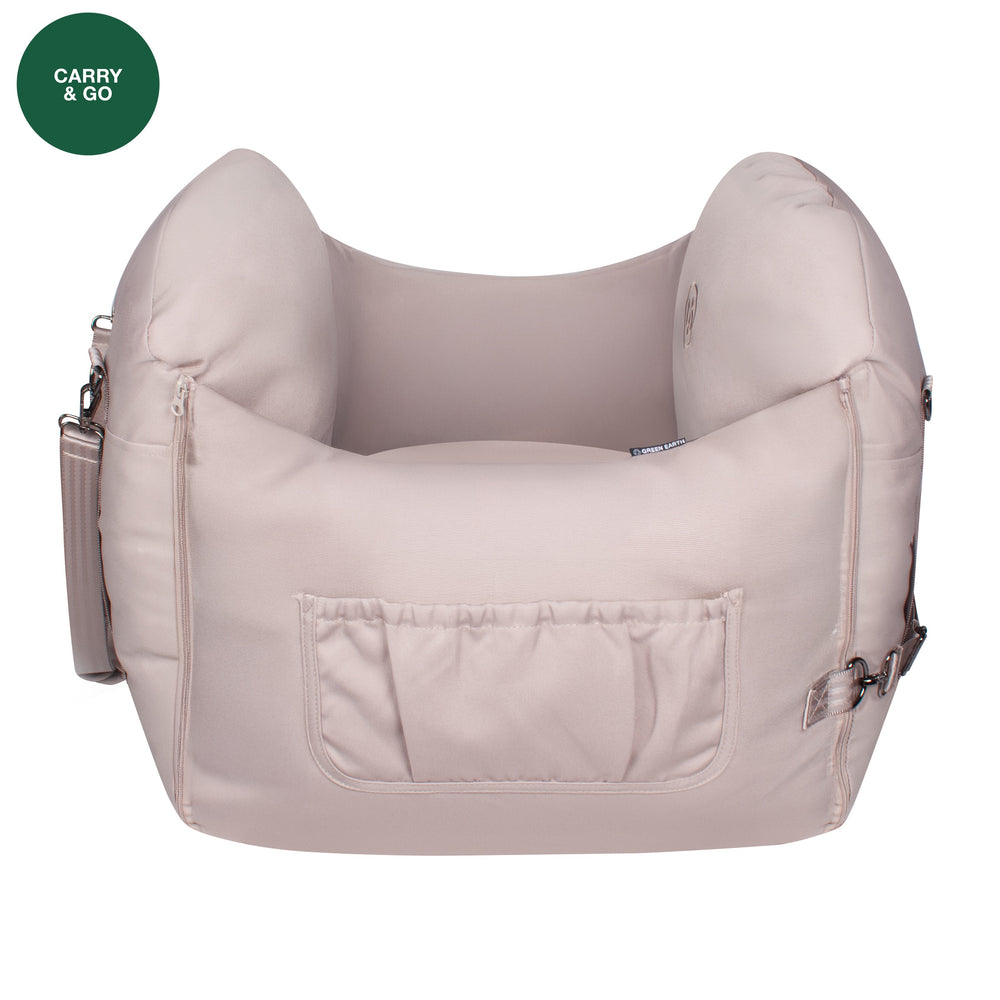
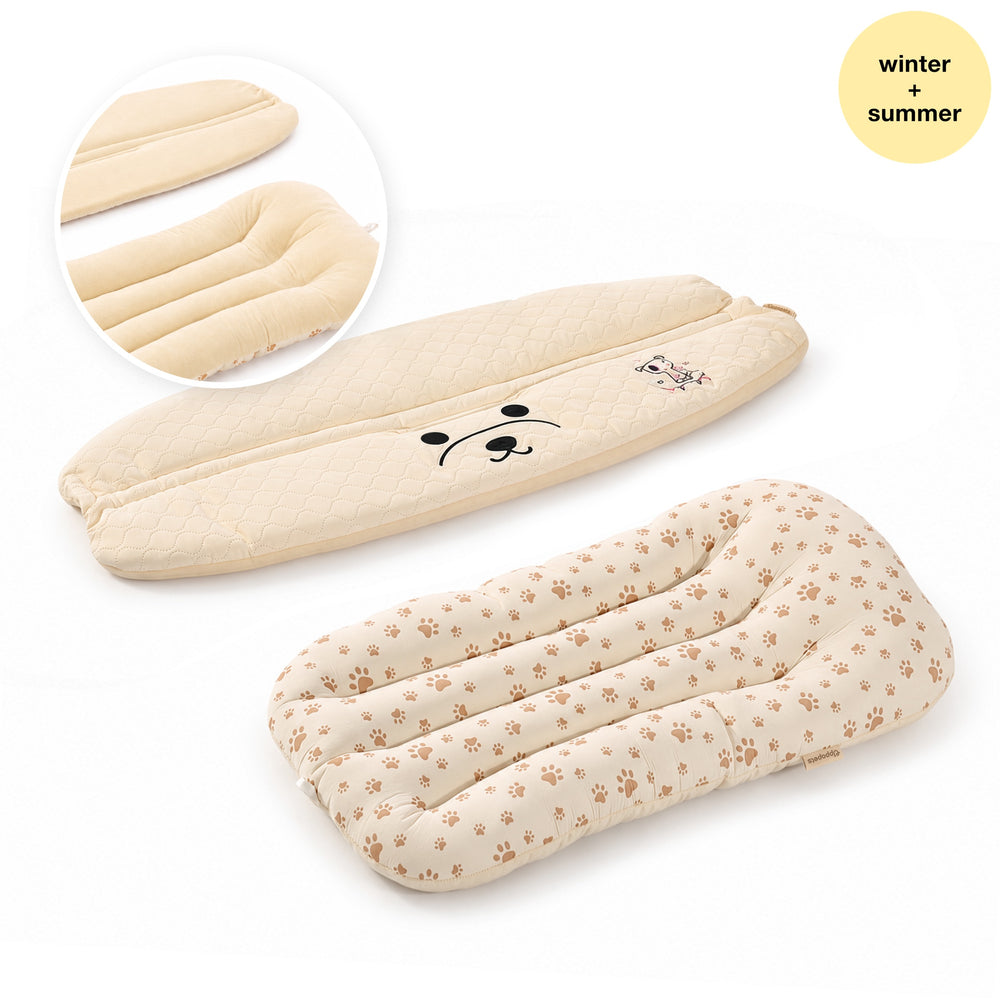

A small dog is not automatically a stroller dog. A large dog is not automatically ruled out. And being older does not tell you everything about how a dog likes to spend their morning.
The more useful question is whether your individual dog, your intended outing and the stroller work together. Size matters, but so do health, temperament, entry and exit, and the way you will use it.
This guide helps you build a picture of the passenger before choosing the product. It is a practical suitability guide, rather than a list of breeds that should spend their walks on wheels.
In this guide
- Start with five aspects of suitability
- Small adult dogs: consider the outing, not assumptions about little legs
- Older dogs: age is context, not the whole answer
- Dogs with a diagnosed condition: use the individual care plan
- Medium and large dogs: space and transfers become especially important
- Puppies: an individual plan matters more than a cute first ride
- Dogs who enjoy company: check whether they also enjoy the setting
- What about nervous or reactive dogs?
- A suitability worksheet to complete before shopping
- Two dogs from the same breed can need different answers
- Match the dog to a format once the purpose is clear
- Questions owners often ask
Start with five aspects of suitability
The purpose: What part of an outing would riding help with?
The passenger: What are your dog's dimensions, preferred resting position and individual needs?
Their response: How do they feel about enclosed spaces, handling, movement and the places you plan to visit?
The transfer: Can they enter and leave the stroller using a safe, manageable arrangement?
The household: Can the person using it load, steer, store and transport it comfortably?
These questions work across breeds. They also prevent a common buying mistake: choosing a pram around one attractive feature before checking whether the complete routine is practical.
Small adult dogs: consider the outing, not assumptions about little legs
There may be a useful role for a stroller in a small dog's routine, particularly where the owner would otherwise carry them for an appropriate part of a journey. That does not mean a small dog is necessarily unable to enjoy walking.
Describe what you are trying to achieve. Is the stroller for a transfer between the car and a quiet destination? A riding section during an outing? A convenient way to bring your dog along when you already have an established carrying routine?
Then check the cabin. A dog can sit neatly for a photograph and still need more usable length or width to settle comfortably. Accessories, thick bedding and another passenger also affect the space available.
Two dogs of the same weight can have different body shapes. Use measurements and the intended resting position, rather than a breed name on a sales page, to compare options.
Older dogs: age is context, not the whole answer
An older dog may still value familiar routines while needing an individual approach to activity. RSPCA Australia advises a veterinary diagnosis for possible arthritis and explains that management differs between individual dogs. Ask your vet about stiffness, reluctance to walk or other changes rather than treating them as an inevitable part of ageing. RSPCA Australia's arthritis guidance.
For a stroller decision, turn that advice into practical questions. Would an outing involving riding be appropriate? What would a comfortable transfer look like? Is the intended resting position suitable? Are there surfaces or movements to avoid?
You are looking for equipment that supports the agreed routine. Avoid choosing on the assumption that an older dog needs the smallest amount of walking possible or will automatically enjoy a longer outing because they are riding.
If you already have an appropriate plan, our guide to gentle outings with a senior dog offers ideas for the experience itself.
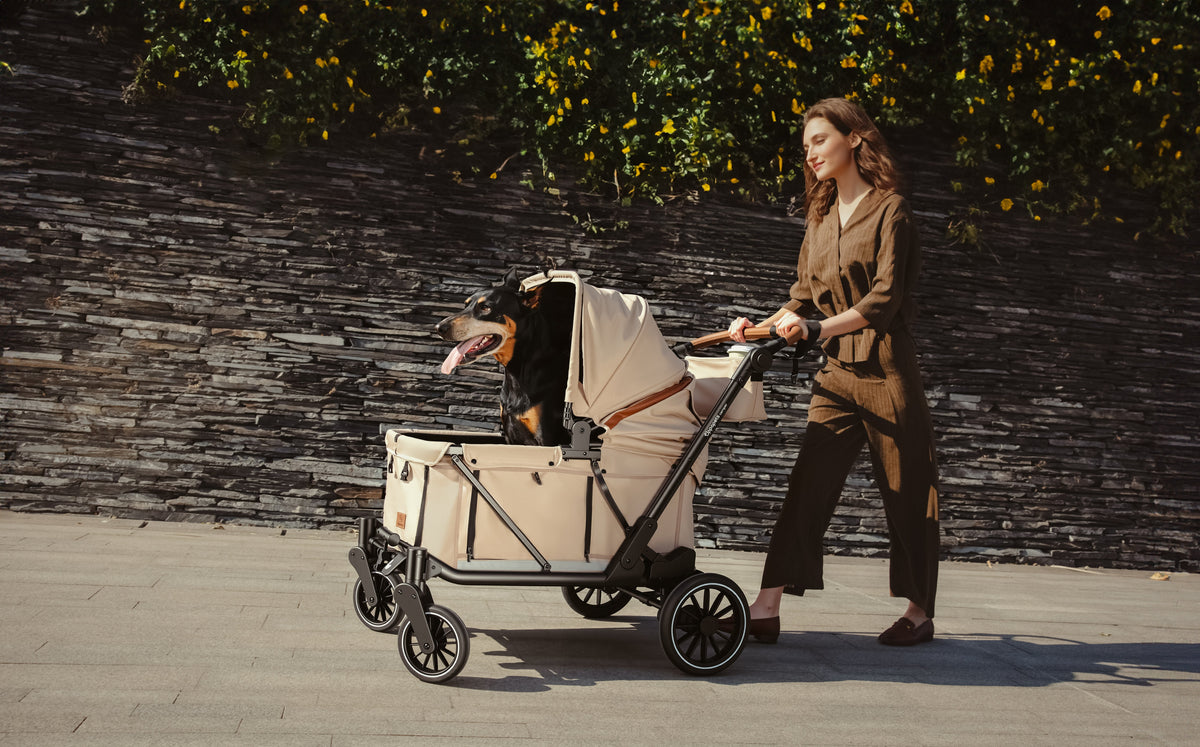
Dogs with a diagnosed condition: use the individual care plan
A diagnosis alone cannot tell a retailer which stroller outing is appropriate. Two dogs with the same named condition may have different restrictions, transfer needs and tolerances.
Ask your treating vet about the actual proposal: “I would like to take this route, using this style of stroller, with this method of entry and exit.” That is easier to assess than “Are dog prams good?”
For a dog recovering from surgery or injury, get specific permission before adding outings. A pram still involves handling, movement and exposure to the environment. It should not be used to reinterpret prescribed rest.
Once those requirements are clear, you can check the equipment against them. If a required feature or dimension cannot be confirmed, keep looking rather than hoping it will work on arrival.
Medium and large dogs: space and transfers become especially important
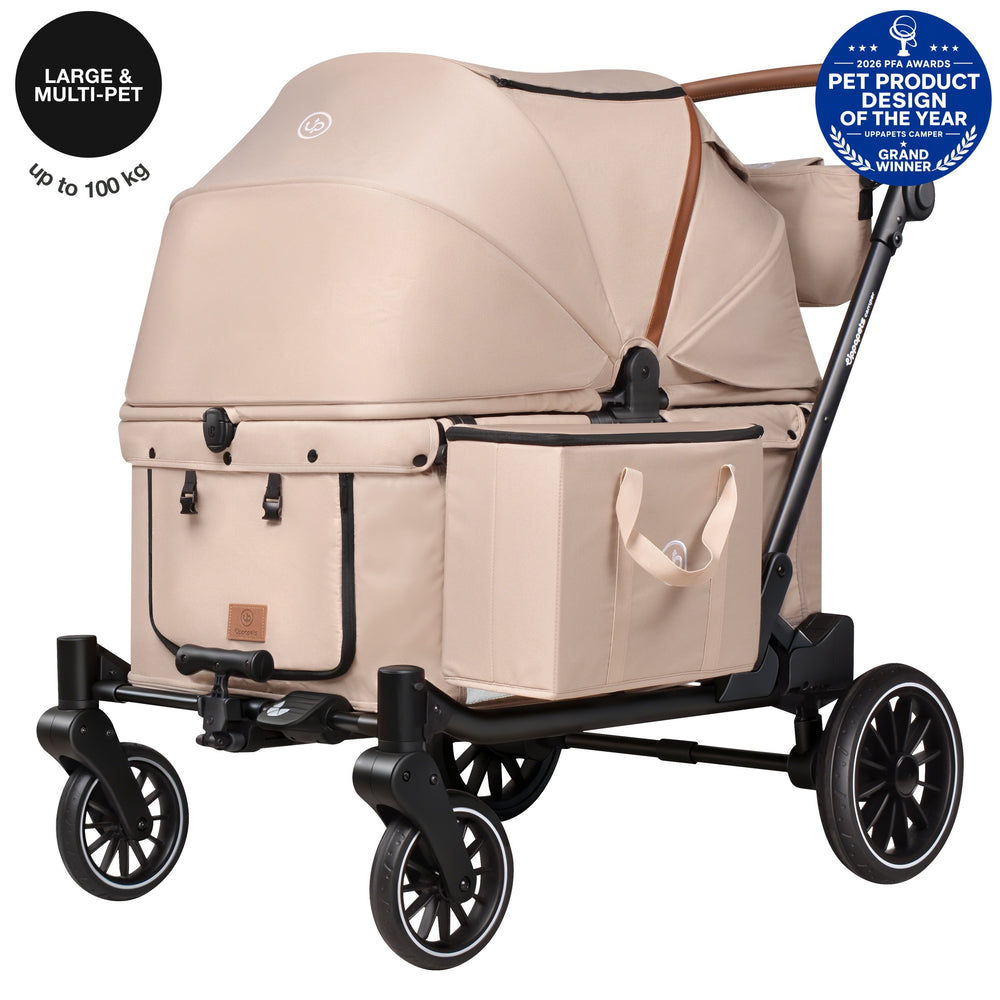
Some pet transport products are designed for larger passengers, so the question is broader than whether your dog fits into a compact pram. Larger formats bring their own requirements for width, turning space, storage and loading.
Begin with the dog's usable space, then follow the entire journey. Can the chosen product pass through the doorway? Is there a suitable way to get it out of the house? Can you manage entry and exit without relying on a lift you cannot perform?
A large stated carrying capacity is a structural specification, not proof that every dog beneath that limit will fit comfortably. Body length, width, posture and the secured enclosure still matter.
If your current plan depends on carrying a large dog up steps or lifting an occupied stroller, stop and redesign the transfer around the manufacturer's instructions and appropriate professional advice. A bigger product is only useful when the complete arrangement works.
Puppies: an individual plan matters more than a cute first ride
A stroller may be one tool an owner considers when planning early experiences, but it is not a blanket solution to vaccination or infection risk. Ask your vet which places and forms of exposure are appropriate for your puppy and area.
Consider the experience from the puppy's perspective too. A busy outing can involve unfamiliar traffic, dogs, voices and movement at the same time. Being inside a stroller does not remove those experiences.
RSPCA Australia recommends giving puppies the choice to investigate new things or move away, and keeping experiences positive. If your puppy seems worried, provide more space or finish the experience. Their comfort matters more than completing a planned destination. RSPCA Australia's puppy socialisation guidance.
Think about growth when buying. A cabin that suits your puppy today may not suit their adult shape. Keep current comfort and likely future use as separate questions rather than choosing an oversized or unsuitable arrangement solely to avoid a later decision.
Dogs who enjoy company: check whether they also enjoy the setting
Wanting to be near you is one reason an owner might explore stroller outings. It is not enough, by itself, to establish suitability.
Make a list of settings your dog already handles comfortably. A quiet neighbourhood path, a familiar garden and a crowded market are very different experiences. Plan around the calmest realistic option while you assess the new equipment.
Separate three things: being near you, being in the stroller and being in the destination. If one of those is difficult, changing the other two may not resolve it. You can still share time in a different way.
What about nervous or reactive dogs?
Do not buy a stroller on the promise that it will fix fear, barking or reactions to other dogs. Enclosure and reduced freedom to move away may be difficult for some passengers.
RSPCA South Australia explains that possible stress signals include lip licking, yawning when not tired and panting when not hot or thirsty. Notice the context and respond to signs of discomfort rather than pushing on with the outing. RSPCA South Australia's guide to understanding stress.
If these are concerns for your dog, ask your vet or a qualified reward-based behaviour professional to help assess the plan. You may need a different route, more distance, a gradual training programme or a different activity altogether. A product cannot make an unsuitable environment suitable by itself.
A suitability worksheet to complete before shopping
| What to write down | Your notes should include | Why it changes the choice |
|---|---|---|
| Intended outing | Where, how often and which section involves riding | Defines the job you need the stroller to do |
| Passenger dimensions | Current weight, body length, width and normal posture | Helps compare usable space instead of guessing from breed |
| Comfort with the experience | Response to handling, enclosure and gentle movement | Shows what needs a gradual introduction |
| Entry and exit | Who assists and how each transfer will happen | Reveals a problem before the first outing |
| Health requirements | Any individual veterinary instructions | Sets the boundaries for the plan |
| Household practicalities | Doorways, steps, storage, car boot and lifting | Determines whether the equipment is usable day to day |
This is a planning worksheet, not a medical assessment or a pass/fail test. An unanswered box is something to investigate before ordering.
Two dogs from the same breed can need different answers
Imagine two small adult dogs with similar measurements. These are illustrative examples, not customer case studies.
The first dog has an established, comfortable routine that includes resting in a carrier. Their owner wants to assess a wheeled option for a level, familiar route. The main questions are the stroller introduction, fit and practicality.
The second dog resists confinement and becomes distressed around passing dogs. The same stroller dimensions would not resolve those concerns. Their owner needs a different starting point, potentially with professional help.
The breed label and weight are similar. The experiences are not. That is why an individual assessment is more useful than a “best breeds for strollers” list.
Match the dog to a format once the purpose is clear
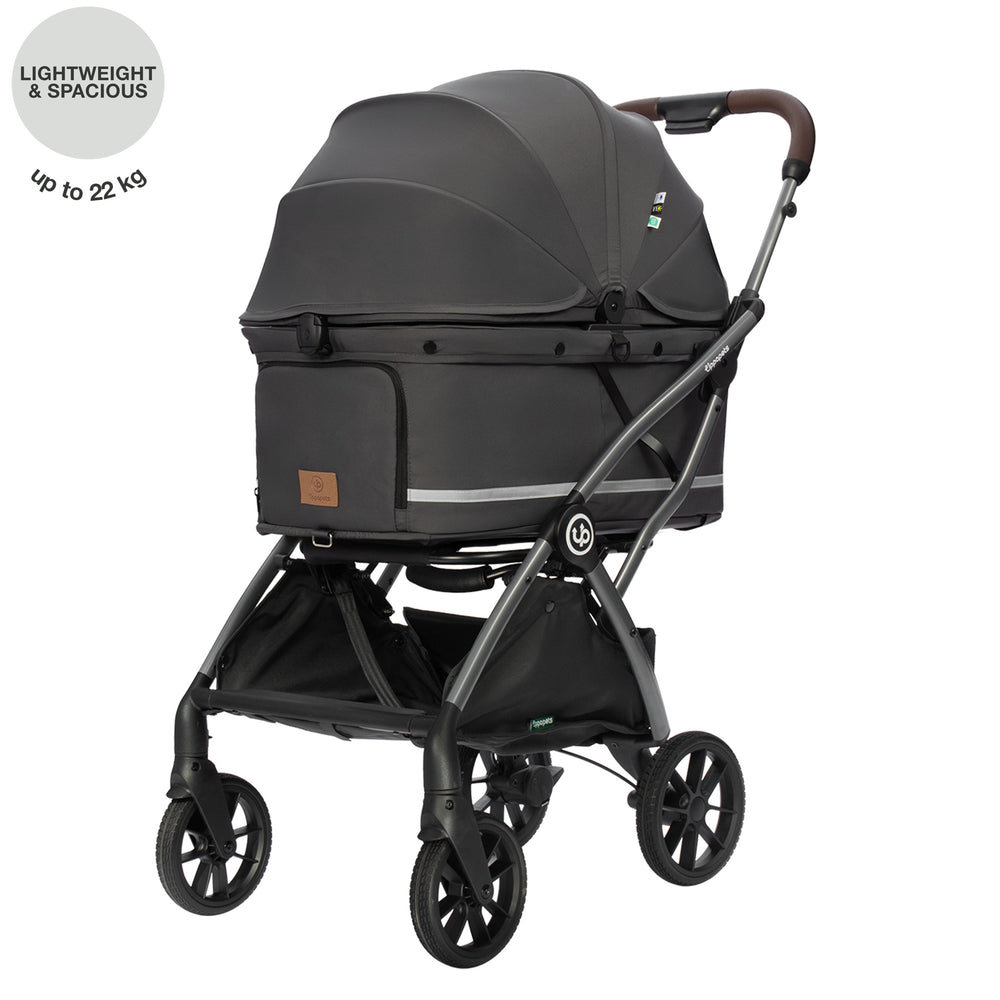
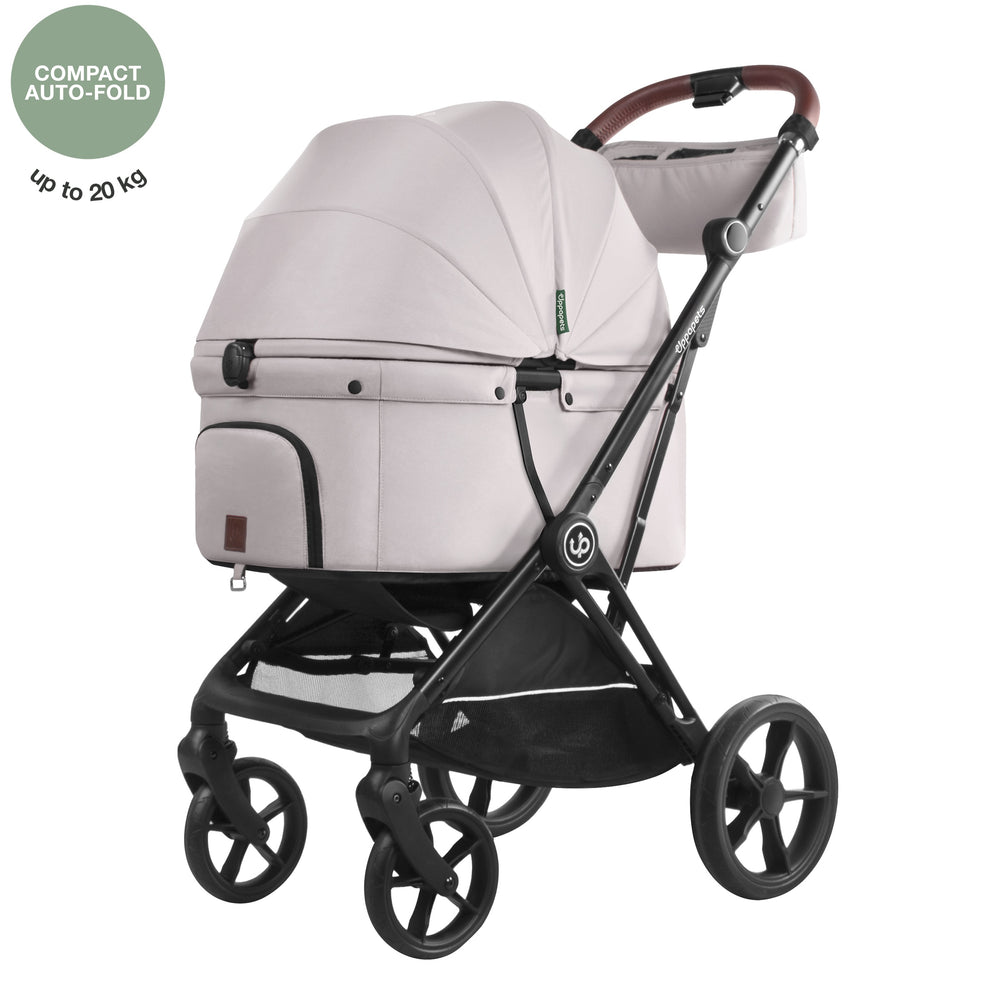
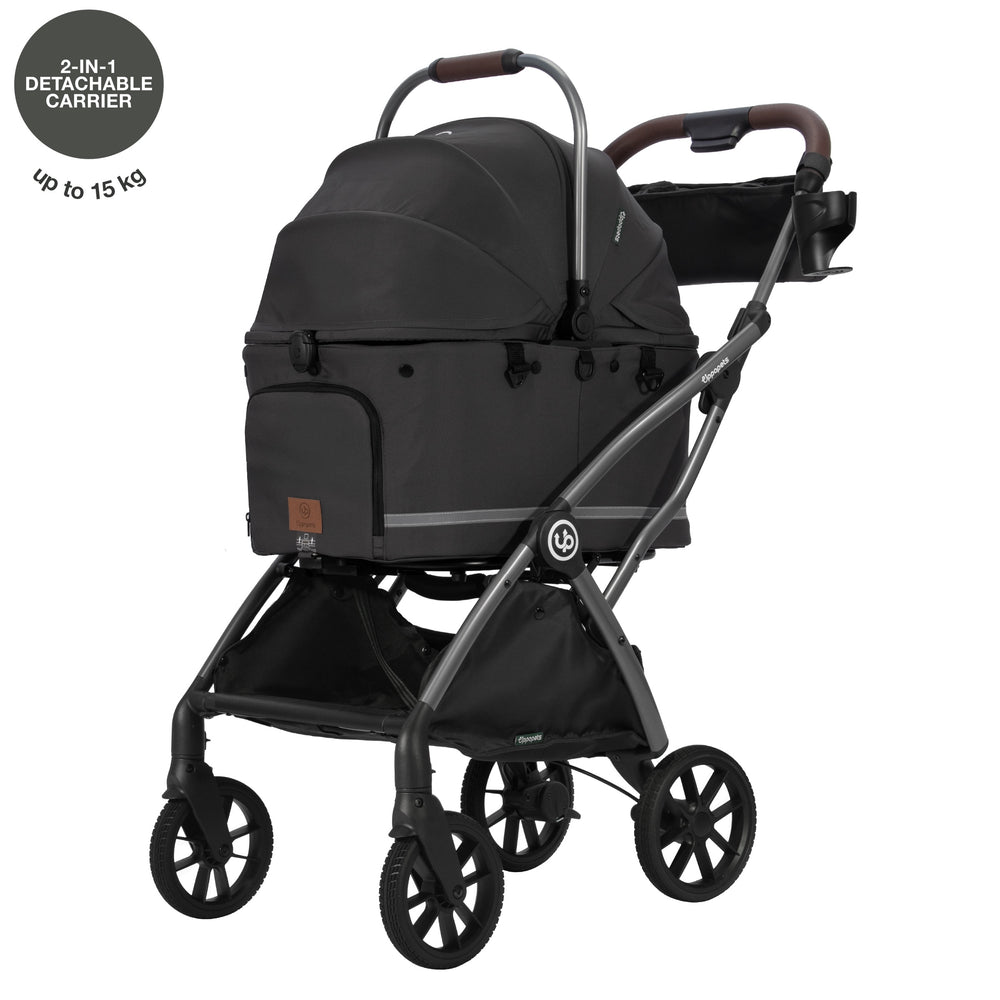
Use the Uppapets comparison page to compare compact strollers, detachable-carrier options and larger formats. Check current dimensions and instructions for the exact model you are considering.
Our measuring guide is a useful next step. Record your dog's measurements before comparing, and confirm usable headroom or entry dimensions if those details are important and not clearly stated.
Uppapets Australia is an Australian business with local customer service. We can help clarify our product information; your treating vet remains the right person for individual health and activity advice.
Questions owners often ask
Can an active, healthy dog use a stroller?
There may be a specific use for one, provided the dog accepts it and their appropriate activity needs are still met. Start with the purpose rather than assuming every dog should have a riding routine.
Are certain breeds too big or too small?
Compare the individual dog's measurements with the specific product. Breed averages are too broad to confirm fit, and weight capacity alone is insufficient.
What is the most important sign of suitability?
No single sign settles it. A useful purpose, comfortable physical fit, a positive response to introduction and a manageable routine all need to work together.
What if my dog simply prefers walking?
Respect that preference within their appropriate activity plan. A stroller should add a useful option for your household; it does not have to become part of every dog's life.
Find their ride