

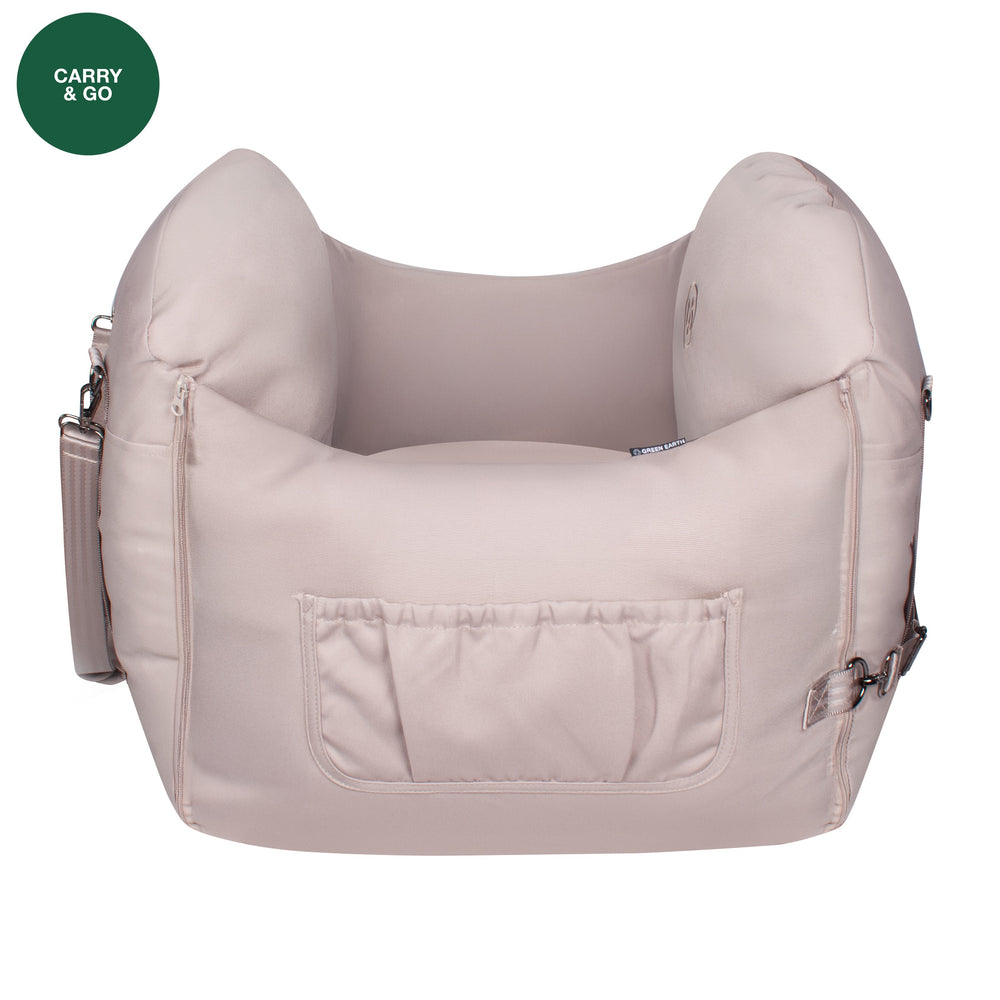

The best starting point for choosing a dog pram for uneven ground is a description of your actual route. A maintained gravel path, a lawn after rain and a deep stretch of beach sand create different handling problems. “Outdoor” or “all-terrain” on a product page does not tell you how a stroller will behave in every one of those situations.
Compare the wheel setup, suspension, steering, load and manufacturer's intended use together. Then consider the narrowest, steepest or most awkward part of the journey, not just the smooth path where you expect to spend most of the walk.
This is a route-selection and buying guide from Uppapets Australia. It uses published product specifications checked on 20 September 2026, alongside practical comparison questions. It is not an independent terrain test or a claim that any stroller can cross every surface.
In this guide
- Describe the ground before you describe the stroller
- Look beyond wheel material
- Understand what suspension does—and what it cannot tell you
- Swivel wheels help with turns; control still matters
- Weight capacity and pushing effort are different measurements
- What the Uppapets specifications establish
- Ask for a demonstration that resembles your outing
- Plan around kerbs, slopes and changing conditions
- Keep the next outing easy with a short care routine
- Questions about outdoor dog prams
Describe the ground before you describe the stroller
“We walk in the park” can mean a sealed loop, short dry grass, loose stones or a muddy track. Start by noting the surface, its usual condition and how much of it you need to cross.
Think about the sections in sequence. You might leave a smooth footpath, cross a sloping driveway, pass through a gate, travel along compacted gravel and stop on grass. A stroller that feels convenient on the longest section may still be awkward at the entrance or turning point.
Record whether there is an easy alternative when conditions change. A route with a sealed return path gives you more options than an out-and-back track where you must cross the same difficult section twice.
| Surface or obstacle | What changes the task | What to investigate before choosing |
|---|---|---|
| Maintained pavement | Cracks, joins, kerb transitions and crossfall | Wheel setup, steering control and the available dropped-kerb route |
| Compacted fine gravel | Loose material over a firm base | Intended use, wheel behaviour and effort under a representative load |
| Coarse or loose gravel | Moving stones and irregular contact | Whether the model is intended for it; the possibility of choosing another path |
| Short, firm grass | Ground firmness and hidden uneven areas | Practical pushing effort and suitability for the surface |
| Wet grass or soft ground | Reduced firmness, slipping and sinking | Whether postponing or rerouting is more appropriate |
| Soft sand | Depth, slope and resistance | Explicit model guidance; a beach boardwalk may be a more practical option |
The table is a way to assess a route, not a terrain approval chart for the Uppapets range. The current instructions for your model take priority.
Look beyond wheel material
Wheel material is useful information, but it is not a complete performance description. PU wheels, for example, identify a material; the term alone does not specify wheel diameter, tread, bearing design, suspension behaviour or pushing effort.
When comparing models, look for the actual wheel dimensions and intended surfaces. If those are not published, do not fill the gap with an assumption based on a lifestyle photograph. A photograph on grass shows a setting, not the force needed to push a loaded stroller through wet turf.
Consider the wheel and frame as a system. Wheel size may affect how an obstacle is approached, but the load, ground and frame arrangement still matter. There is no single wheel specification that can guarantee a comfortable outing for every pet.
Understand what suspension does—and what it cannot tell you
Suspension is a feature worth investigating when a route includes ordinary bumps. However, the word “suspension” does not provide a measured result for how much movement reaches the cabin with a particular load.
Check which parts of the stroller have suspension and whether the manufacturer provides a demonstration or test information. If a video shows a stroller moving across a surface, look at the surface condition, pace and passenger rather than treating a few seconds of footage as a comparison against every alternative.
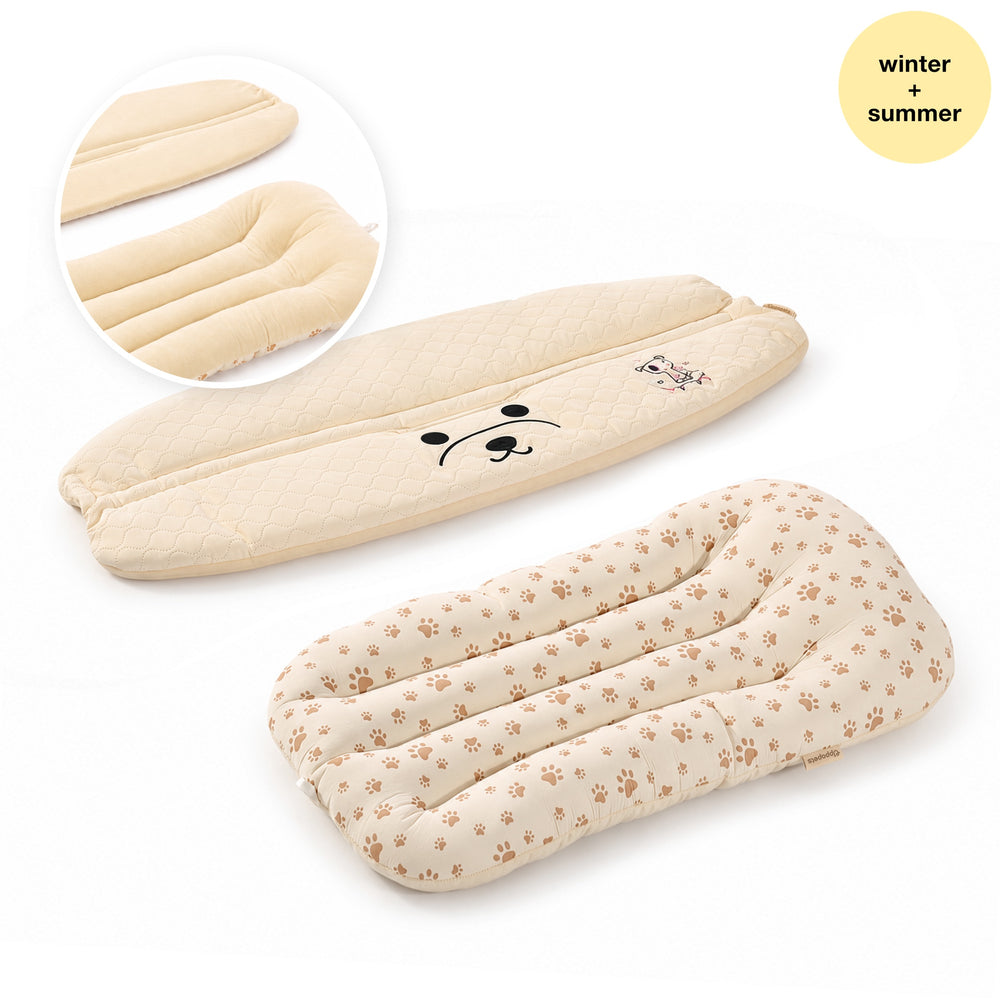
A cushioned base and suspension serve different roles. Extra bedding should not be used to compensate for an unsuitable route or product, and any added bedding needs to follow the model's instructions. It also changes usable cabin space.
For a dog whose condition makes movement or jolts a concern, your vet should guide the outing and transport plan. Suspension is a product feature, not a treatment or a promise of pain-free travel.
Swivel wheels help with turns; control still matters
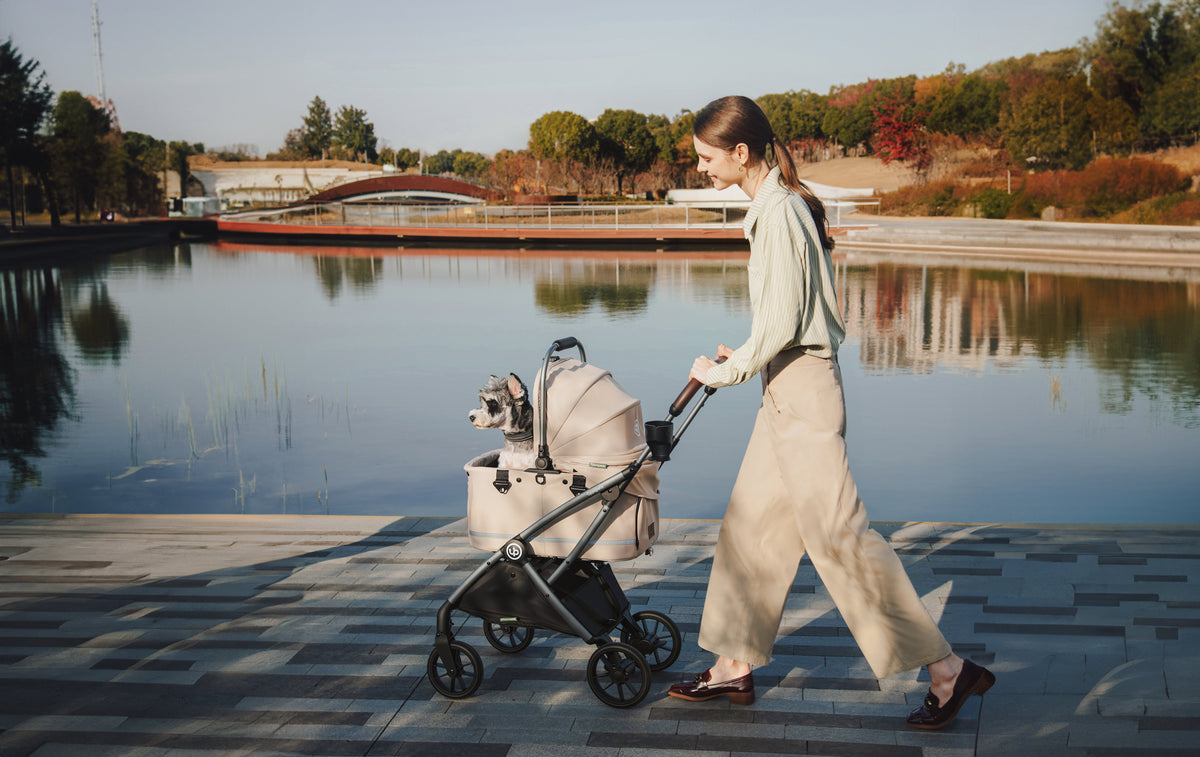
Swivelling front wheels are useful to consider for paths with frequent changes in direction, shop approaches or gates. Some strollers also provide a wheel-lock arrangement for particular uses, but this must be checked model by model. A swivel feature does not automatically mean a lock is present.
Use any adjustment only as the instructions describe. Do not attempt to cure persistent wheel wobble by tightening parts at random, adding weight or continuing onto rougher ground. Movement that suggests a loose, damaged or incorrectly fitted component needs attention before the next outing.
If your existing stroller has developed a steering problem, the wheel-wobble guide addresses inspection and when to stop using it. That is a different question from choosing a new stroller for a particular surface.
Weight capacity and pushing effort are different measurements
A stroller's maximum pet weight tells you its stated limit. It does not tell you how easy the loaded stroller will be to push over grass, turn in a narrow space or control on a slope.
Consider the empty stroller weight, pet weight and permitted accessories together when thinking about the handling task. Keep the manufacturer's individual limits for pets and storage in place; do not convert a pet-weight limit into an assumed allowance for luggage everywhere on the frame.
The person who normally handles the stroller should assess the routine. A short demonstration by someone else may not answer whether you can comfortably manage your usual distance and terrain, particularly if you also need to handle another dog.
What the Uppapets specifications establish
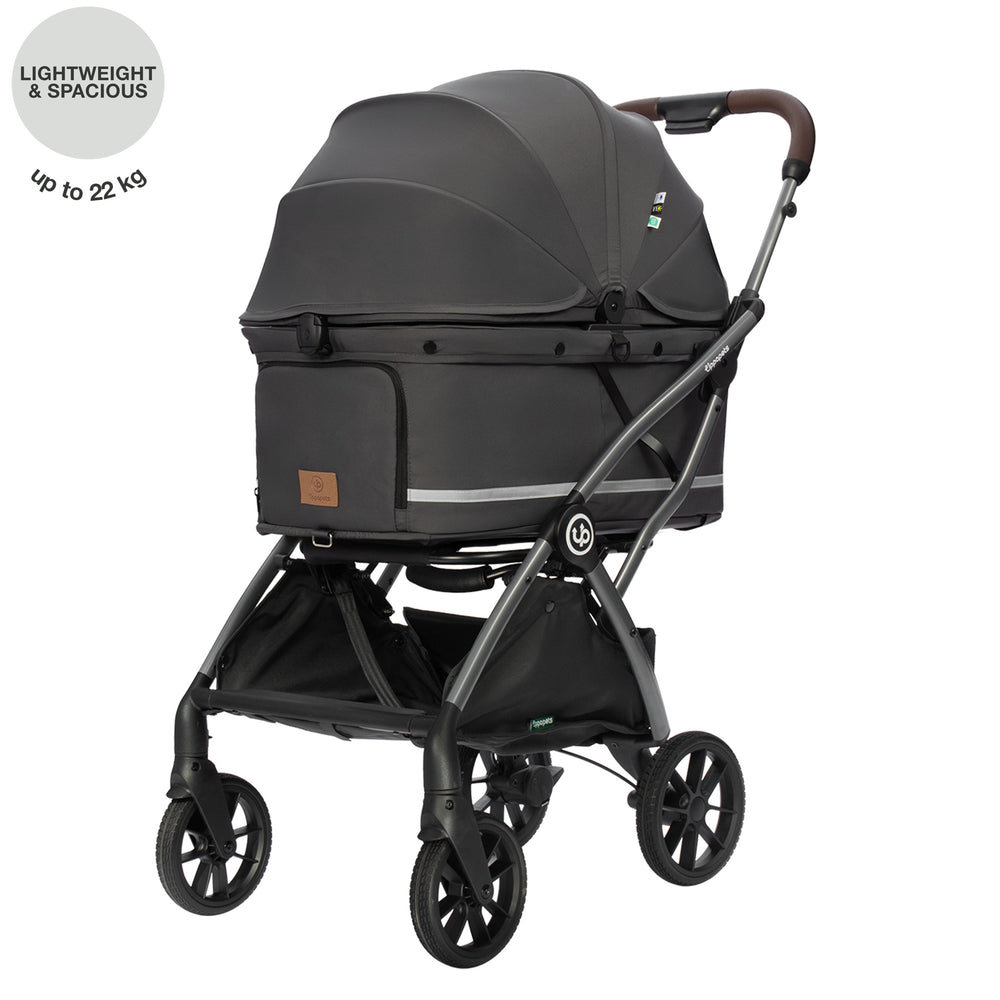
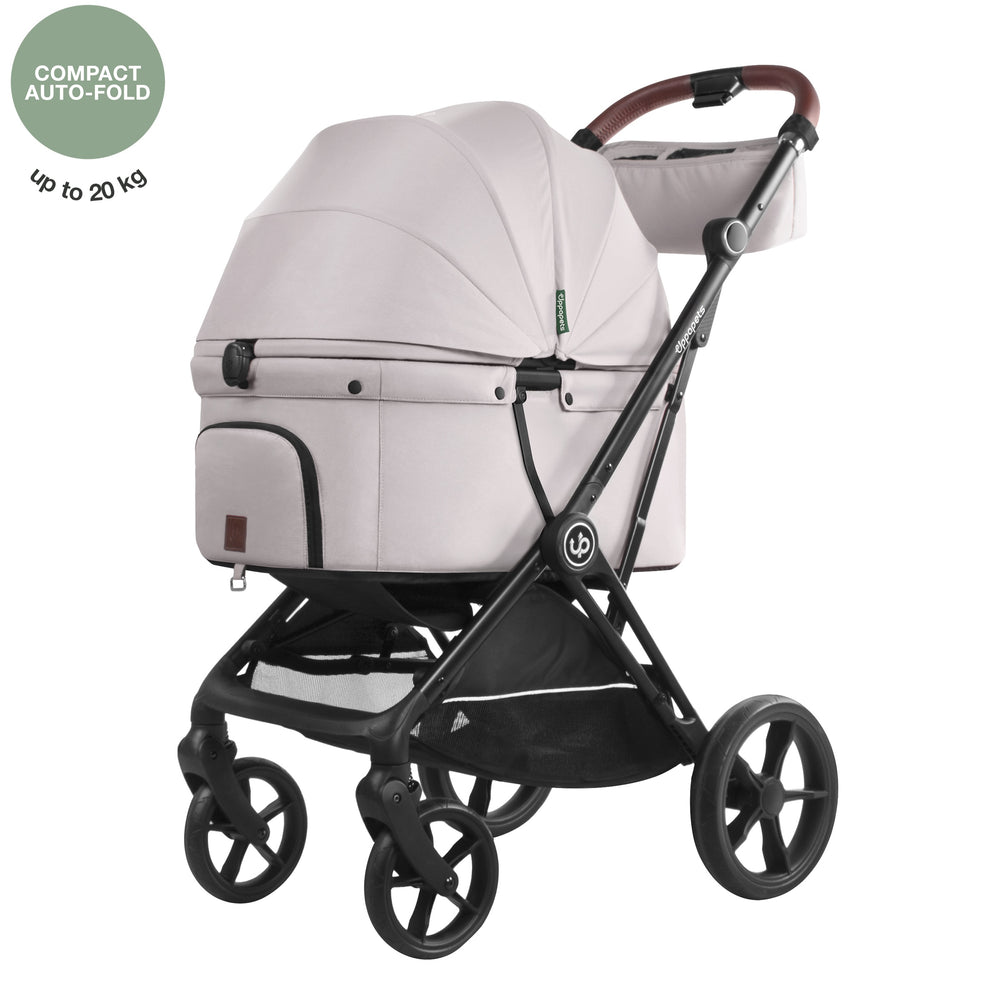
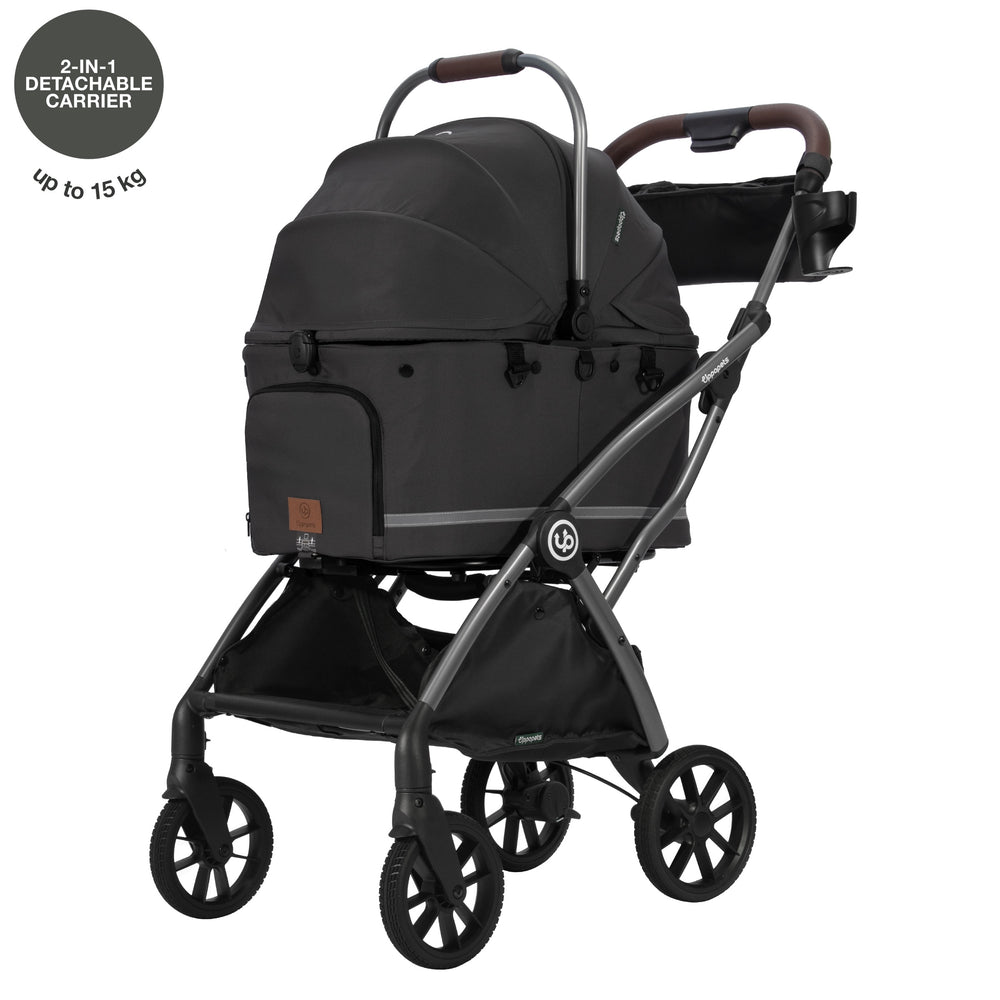
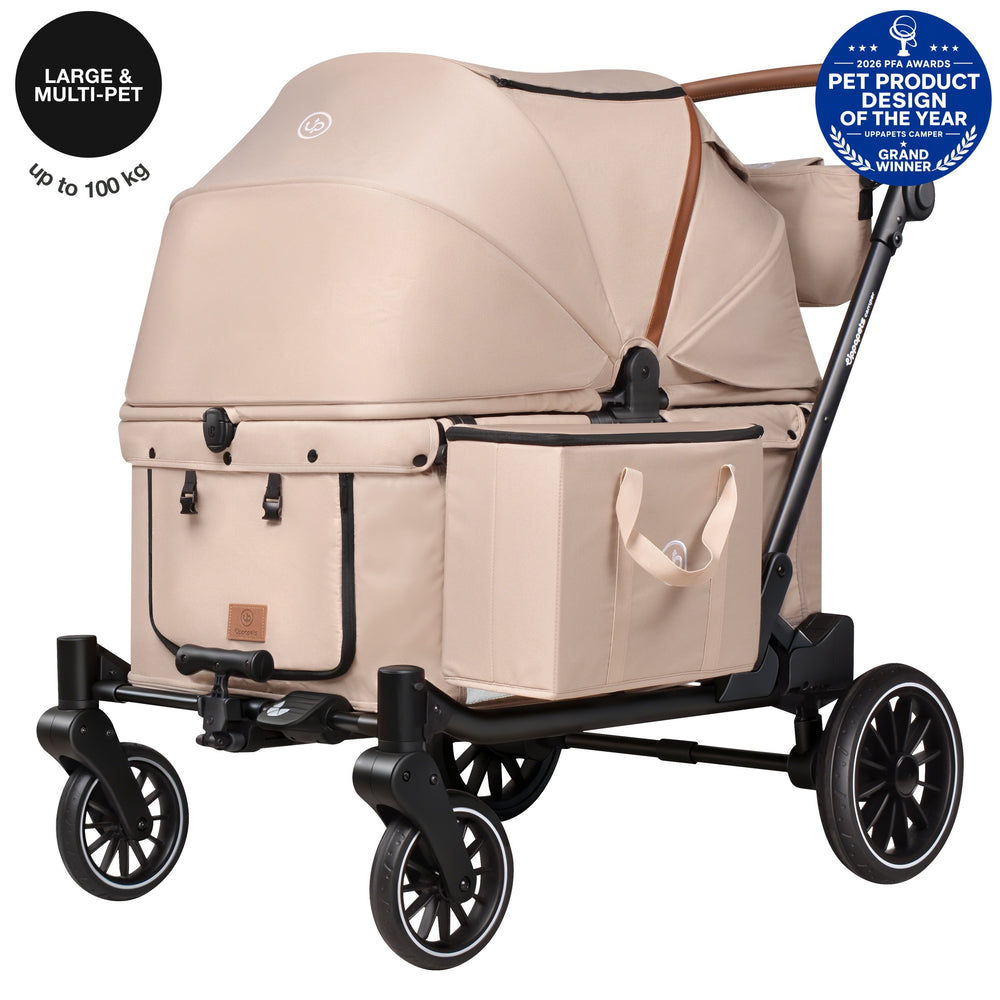
The current comparison page lists PU wheels, suspension, 360-degree swivel front wheels and a one-link brake for Hybrid, Nero Plus and Flander. Camper Max's product page lists PU wheels, suspension, 360-degree front wheels and a one-link brake, alongside push-and-pull handles.
The range comparison describes use over footpaths, grass and everyday bumps. Those published features help you shortlist a model, but they do not establish identical handling across the range or unrestricted suitability for deep sand, steep trails or running.
| Model | Empty weight | Overall width | A useful additional check |
|---|---|---|---|
| Hybrid | 8.4 kg | 49 cm | Passenger fit and lifting routine |
| Nero Plus | 9.5 kg | 51 cm | Cabin fit, folding space and route width |
| Flander | 9.6 kg | 49 cm | Detachable-carrier use and passenger fit |
| Camper Max | 21.3 kg | 75 cm | Gates, turning space and handling the larger frame |
These figures come from the range comparison and Camper Max product page. They are not a ranking of terrain performance. Choose the cabin and handling arrangement that suit your pet, then check your intended route against the relevant model guidance.
Ask for a demonstration that resembles your outing
A useful demonstration answers a specific question. For example: “How does this model handle a turn from a maintained path onto short, firm grass?” That is much more informative than “Is it good off-road?”
When viewing a demonstration or arranging an appropriate trial, look for:
- The exact model and wheel configuration.
- The surface type and whether it is firm, loose, wet or dry.
- The approximate load and how it is distributed.
- Ordinary walking pace rather than a dramatic high-speed clip.
- A start, a stop and a turn, as well as a straight section.
- An unedited view of the handler and stroller where possible.
The purpose is to understand ordinary use, not to find the roughest obstacle a stroller can survive. Do not arrange impact tests, load beyond the stated limit or use a pet to test questionable ground. Any trial should remain within the manufacturer's instructions.
Plan around kerbs, slopes and changing conditions
Prefer routes with dropped kerbs and enough room to approach them comfortably. A kerb is an obstacle to plan around, not an opportunity to demonstrate frame strength. Do not drag an occupied stroller up steps or use a pull handle as a lifting point unless the manufacturer specifically permits that use.
Keep slopes within the model's guidance and your ability to maintain control. A parking brake should not be assumed to work as a speed-control brake while moving. Choose a level stopping place where possible and use the brake as instructed.
Ground conditions can change the plan. Rain can soften a route that was firm yesterday; maintenance can leave loose material on a previously smooth path. A familiar destination does not remove the need to look at the actual surface that day.
If the route becomes unsuitable, turn back or choose another path. Being able to change the plan is more valuable than trying to justify an “all-terrain” label.
Keep the next outing easy with a short care routine
After use, check for material caught around the wheels and inspect visible components for damage or looseness. Follow the model's cleaning and maintenance instructions, including any restrictions on water, cleaning products and lubrication.
Let damp fabric dry as directed before storage. Do not pressure-wash wheel assemblies, add lubricant or dismantle parts unless the product instructions call for it. A quick clean and inspection can make it easier to notice a change before the next outing.
For a new rattle, steering change, unreliable brake or insecure folding lock, stop using the stroller until the issue is resolved. Regular care does not make continued use of a damaged component appropriate.
Questions about outdoor dog prams
Can any pet stroller go on grass?
Grass varies from firm, closely cut lawn to soft, uneven ground. Check the model's intended use and the conditions. A wheel feature or photograph alone cannot answer for every grass surface.
Does a dog pram with suspension work on the beach?
Suspension does not establish suitability for sand. Check explicit guidance for the model and the type of sand. A boardwalk or firm maintained path may provide the outing you want without needing to cross deep sand.
Can I jog with a stroller that has large wheels?
Large wheels do not establish approval for running. Use a stroller for jogging only when the manufacturer specifically permits that activity and provides the relevant instructions.
What is the most useful buying question?
“Will this model suit my pet and the route we regularly take?” Describe the surfaces, check the product guidance and compare evidence that reflects those conditions. A stroller that works well on your ordinary route is more useful than an impressive label with unclear limits.
Find their ride